Allen Klein: A playlist by Fred Goodman
by Fred Goodman
October 26, 2015
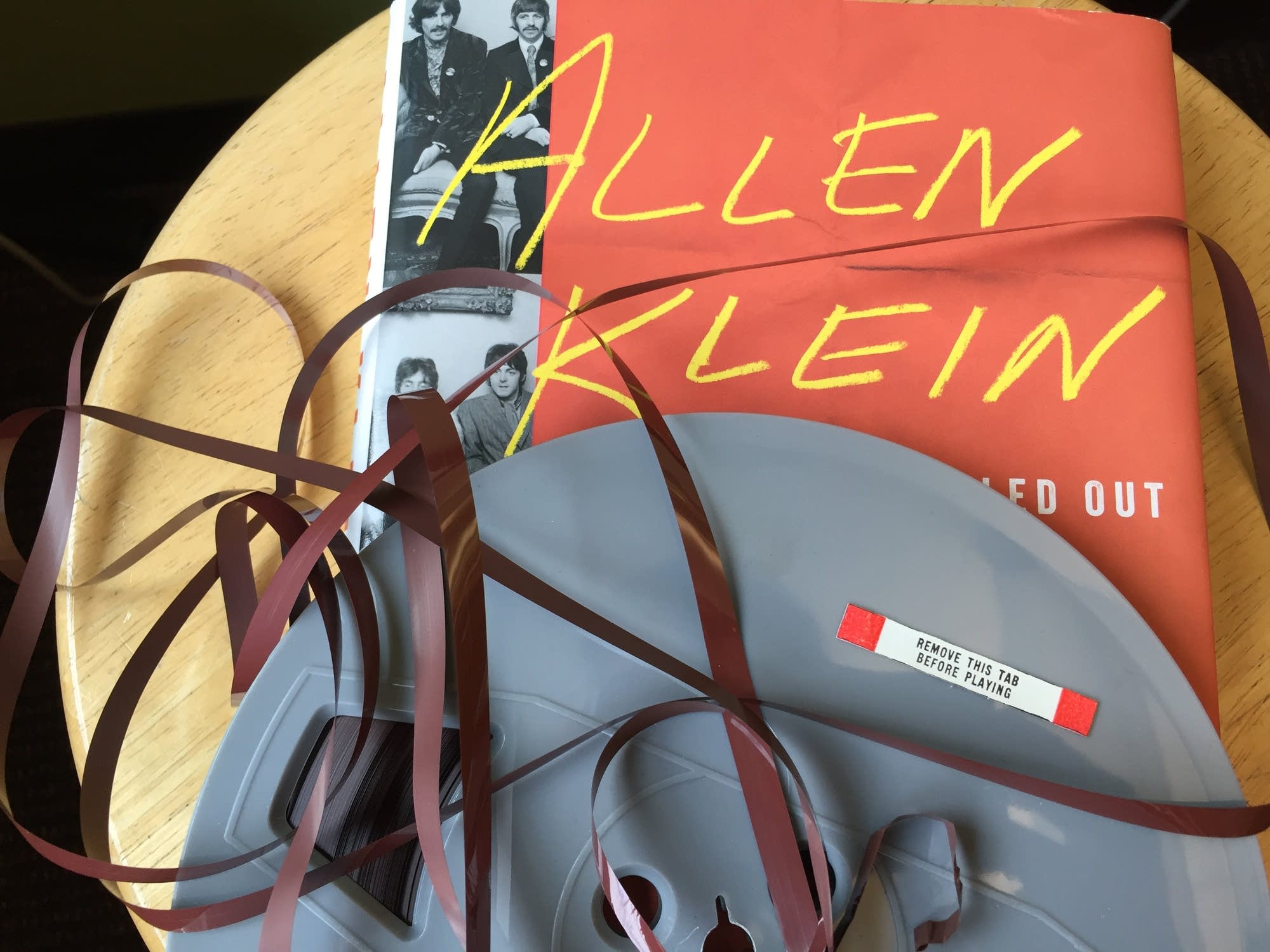
Allen Klein was certainly one of the more notorious and powerful figures in rock history. At one point the manager of both the Rolling Stones and the Beatles, he was rumored to have ripped off the former and broken up the latter.
In my new book I conclude that Klein—who served a jail term on a tax charge and was hardly an angel—was nonetheless one of the first and most important artist advocates of the rock era, playing a dramatic role in helping artist wrest financial and artistic control of their work from record companies. Though he would later fall out with the Stones and separate from the Beatles, he played a key role in their careers and helped define the rock music business from the 1950s through to his death in 2009.
Below is an Allen Klein playlist—a sort of soundtrack to Klein's story. This playlist is also available on Spotify.
Sam Cooke: "A Change is Gonna Come"
An accountant by training, Klein made his reputation auditing record companies and music publishers to try and find underpayments for a wide range of artists from Bobby Darrin to Lloyd Price. When Klein uncovered huge underpayments for Sam Cooke, the singer was so impressed that he asked Klein to become his manager. Klein responded by negotiating new contracts and creating companies for Cooke that gave him a bigger share of record income and broader recording freedom. It was Klein, in awe of Cooke's talents, who convinced Cooke—over the objections of RCA Records—to perform his moving American psalm and a signature song of the civil rights movement, "A Change is Gonna Come," on The Tonight Show.
The Animals: "House of the Rising Sun"
At the height of the British Invasion, Klein became a key adviser and negotiator for the producer Mickey Most, who was then working with the Animals and Herman's Hermits. In a bold gambit, Klein promised Most he could get him $1 million if Most would make Klein his business manager—at a time when $10,000 was considered a good payday for a producer. Klein succeeded by forcing Most's British and American record and publishing companies to re-negotiate all his contracts or else risk losing Most's acts.
The Kinks: "Sunny Afternoon"
Impressed by Klein's growing reputation as a tough customer, Ray Davies asked Klein to represent the Kinks. No shrinking violet himself, Davies was awed by how tough Klein could be in talks with record executives. "To say that he bullied them into a new deal with the Kinks would be an understatement," Davies said. Indeed, in one negotiating session Klein was reportedly so abusive to record executives that the Kinks' lawyer started to cry—and Klein was on his side.
Donovan: "Sunshine Superman"
Eager to expand his audience, Donovan told Klein he envied the relationship his friends the Beatles had with their producer George Martin—an arranger and sympathetic collaborator who helped flesh out their sound on records—and that he was looking for a similar studio partner. At Klein's suggestion, Donovan began working with Mickey Most. Their first record together, "Sunshine Superman," was one of the first psychedelic pop records and became an enormous hit.
? and the Mysterians: "96 Tears"
In the mid-1960s, Klein purchased the Philadelphia record company that owned the Cameo and Parkway labels. Among the acts on the rosters were Chubby Checker, Bobby Rydell, Dee Dee Sharpe, the Dovells, and the Orlons; and the company boasted the early garage rock anthem "96 Tears" by ? and the Mysterians. Cameo-Parkway also released records by Clint Eastwood and John Zacherle, a New York disc jockey who "moonlighted" as a television ghoul, popping out of a coffin to show horror films on late-night TV.
The Rolling Stones: "2000 Light Years From Home"
In 1964, Rolling Stones co-manager (and style guru) Andrew Loog Oldham enlisted Klein to negotiate a new recording contract for the band. At a time when the Beatles, on sales of singles, were splitting a penny royalty four ways, Klein got the Stones a guarantee of $2.4 million—considered a fortune then. While Klein enriched the band, he also became the Stones' music publisher and record manufacturer—an arrangement the band would later say they regretted. Ultimately, the Stones spent 18 years battling Klein in a variety of court cases, but Keith Richards admitted he learned more about business from Klein than anyone else, and called their disagreements "the price of an education." Indeed, the deals Klein negotiated for the Stones impressed the Beatles and played a role in Klein becoming that group's manager.
John Lennon: "Jealous Guy"
Klein pursued the Beatles for years trying to become their manager, and finally succeeded in the late '60s when the band's company, Apple Corps, was threatening to bankrupt them. Klein played a huge role in putting the Beatles' financial house in order, shutting down much of Apple and negotiating a lucrative new American recording contract—and convincing the band to release the film and soundtrack album for Let It Be. Among the Beatles, Allen was closest to John Lennon—Klein had grown up in an orphanage in Newark, NJ, and Lennon viewed him as an up-from-the-streets kindred spirit. The two were unusually close and loved to talk music together. Klein made fun of an old Lennon song, "On the Road to Marrakesh," that John then re-wrote as "Jealous Guy." On the other hand, Klein's relationship with Paul McCartney was nothing short of poisonous, with McCartney eventually suing to break up the Beatles in order to keep himself at arm's distance from Klein.
George Harrison: "My Sweet Lord"
Though closest with Lennon, Klein was eager to champion George Harrison's work, pushing for the Beatles to release "Something" as a single and later playing a big role in mounting and producing the Concert For Bangladesh. When Harrison's biggest hit, "My Sweet Lord," resulted in a claim of copyright infringement from the publisher of the old Chiffons hit, "He's So Fine," Klein at first vigorously defended him. Later, when Harrison split with Klein, Allen bought the publisher of "He's So Fine" and went from defending Harrison to suing him. One of the most bizarre chapters in Klein's career, the court case went on for over two decades.
Bobby Womack: "Across 110th Street"
The singer and composer Bobby Womack had been a close friend and protege of Klein's first major client, Sam Cooke. In the early '80s, Womack enlisted Klein to manage his career and help him sort out a variety of lawsuits and contracts. The two worked together until Klein's death in 2009.
The Verve: "Bitter Sweet Symphony"
While working on their 1997 album Urban Hymns, the Verve sampled a version of the Rolling Stones' "The Last Time" from an instrumental album by the Andrew Loog Oldham Orchestra for the album's opening track, "Bitter Sweet Symphony." Unfortunately, they forgot to get permission from the song's publisher: Allen Klein. When Klein refused to grant rights to use the song, the band and their record company feared they were about to lose a major hit. To placate Klein, they agreed to let his publishing company buy singer and lyricist Richard Ashcroft's interests in the song for $1,000. "Bittersweet Symphony" went on to be a huge record worldwide, and has been licensed repeatedly for a variety of commercials.