Gabriel Roth talks about Daptone Records past, present and future
by Toki Wright
March 14, 2018

Recently, I had the honor of speaking with Gabe Roth, co-founder of Daptone Records — home to artists like Sharon Jones, Charles Bradley, The Budos Band, Antibalas and other high-quality bands. Roth shared insights about what it was like to work with Sharon Jones, about the future of Daptone, about the Dap-Kings' chemistry and more.
Here's our conversation:
Toki Wright: So correct me if I'm wrong, but Daptone is 16 years old this year, and being a father of a 16-year-old myself, I know it's a very pivotal point in life. So how is the teenage Daptone Records different then the infant Daptone?
Gabriel Roth: Other than crashing our parents' car … it's a very interesting time for Daptone because I think it's kind of like the beginning of a phase two. You know we kind of had this old guard of artists. We started really as this very insular family, the same musicians backing all the singers, and really, this very local family of people in Brooklyn, and obviously with the passing of Sharon [Jones] and Charles [Bradley] and some other people this past couple of years, and with certain bands kind of getting older and phasing out or working less, you know that old guard is thinning out a little bit and slowing down. I mean you still have Antibalas and The Budos Band and Naomi [Shelton] and the Sugarman 3 and some of the early bands that are still making records and are still touring and stuff, but we're starting to see this whole second wave now where we have a bunch of artists and records coming out from people, from Canada and from Cuba and from California and different places. It's not really as local anymore. I think that the philosophy and the sound and stuff is intact and maybe stronger than it's ever been, but we're kind of a little more diversified then we were.
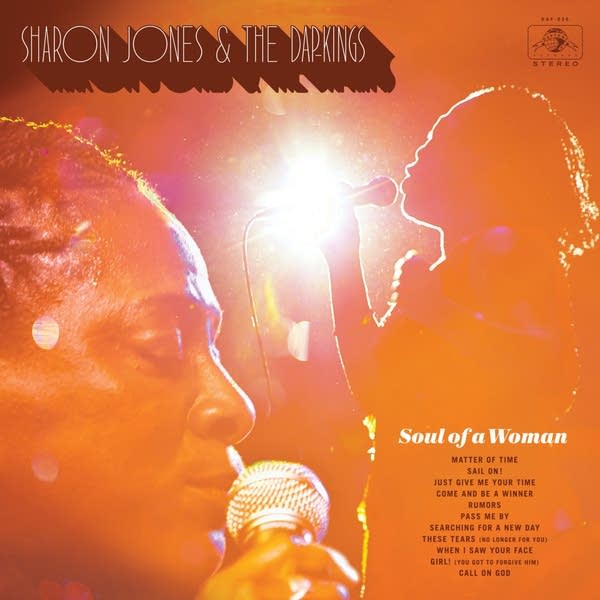
TW: So there's a lot in there that I kind of want to touch on. Definitely I want to speak about Sharon Jones and I want to talk about the new guard and I want to talk about your sound. For Sharon, I know that the album Soul of a Woman just was released in November, and that was, I believe, a year and a day after she passed and I wanted to know a little bit about the process, whether the album was finished or whether you had to mix the album down in the last year and how that process was. Because most of us if we lose someone, and of course my condolences, but when we lose someone, we might see a picture of them on a regular basis but we don't listen to their voice repeatedly. So how was that process of mixing down this record if that happened afterward?
GR: We firstly I appreciate you just being aware of that because it was very painful for me personally. The process — I mean, the record was mostly completed while she was alive. I mean after Sharon died there were a few overdubs, some orchestral things and a couple things we wanted to add, but it was mostly recorded, you know, and it was really a finished album before she died. But yeah, I had to spend a lot of time mixing it and, like you said, listening to her voice every day, and it was very hard.
I remember an interview I read once with Steve Cropper talking about mixing The Dock of the Bay album in the weeks after Otis Redding had passed and how hard that was for him, and it was hard, man. I'd go into the studio every day and hear [my] friend's voice. You know the singing in the songs I would, eventually — like anything else, as painful as it is — you get used to it, and it's kind of what you have to do and you start concentrating on the music and hooking up the mixes, but the hardest part for me was these little moments before and after takes, of just the banter. You'd hear Sharon in the studio say something funny or something silly or something meaningless or "What are we having for lunch?" or something, and no matter how many times you've heard it, it still felt like she was in the room with you. She was my very dear, close friend for 20 years, so it was hard doing it every day like you said. But it felt really important to me. It kind of kept me going and it felt like I owed it to her to really make that record as great as I could and to finish everything.
TW: And I think maybe most people don't understand how close you all were. I think we usually see bands and we all go, "Well that's the singer in the band and that's the drummer in the band," but when I went back and I looked at the documentary that was on YouTube I saw that how just even in building the studio and how much you all sat and had meals together and spent a lot of quality time together, including being on the road, I felt like she was your family member and how losing your family member might be deeper than just losing a bandmate.
GR: Yeah, yeah, it's true. I think you're right, I don't think a lot of people understand how close you get in those situations. Especially in the early years before we had tour buses and separate dressing rooms and stuff, and we would all be in a Econoline van like most bands, and there'd be eight of us or nine of us in these vans and drive around the country you know, spending every night together, eating every meal together, and hours and hours in these vans and sharing time on the stage. We listened to the same mixtapes and we ate the same food and we breathed the same air. We knew all the same jokes, you know? So I am closer to Sharon and the people in the band than I am to a lot of people in my own family. I spent more time with them.
Over the years you just get closer and closer and it becomes something where it's not really about being friends even or bandmates, it's kind of deeper than that. It's like you know people always say "family" but there's no better word for it you know. It's just somebody that's necessarily close to you and part of you and that you relate to on a certain level, and I think, really, that was a thing that was maybe the biggest component to us musically. We were on stage or in the studio, the way the band played together and the way that we reacted to Sharon and the way that she reacted to us was the way that you could only, musically it was at a level where you could only do stuff like that with people that you're musically intimate with and that you know everything about them.
Even writing songs, everyone in the band — not just me, but all the guys in the band — writing songs for Sharon to sing. You can't just put words into some stranger's mouth like that, and you don't want to sing words that some stranger wrote, but when you're close like that you're writing songs about somebody in the band has a falling out with their girl or something and they write a song about it, Sharon can sing about it because she went through it with them on the road. She sat and had drinks with them and heard the phone calls from the other side of the dressing room. You know so it was all very real, and I think that was what made our relationship with Sharon and just that band so special, it made it real deep and it was always sincere.
TW: That's one of the things I really admired about watching you all play together. The first time I caught you playing, I was on tour with Brother Ali and we were playing Coachella in 2008, and I caught you for the first time like "They're in the pocket! They are super tight!" I don't know how you get that tight. And as I started researching more and more, I saw how closely you played with each other in the studio and the home feeling of the studio in Brooklyn. How much does the studio setup, studio acoustics, the proximity of how close you are to playing to each other impact the way that you play?
GR: That's an interesting question. Our studio is small in Bushwick. It's not a big studio, and so everybody ends up close together. I mean really the first thing is, a lot of groups now when they record, they're not even playing together at the same time. Everyone is just overdubbing stuff and they're doing it one note at a time on a computer and assembling it later. So the idea of actually playing in the same room and trying to make the same air vibrate together is huge.
And acoustically it's big. I think especially for things like a horn section you know we've always recorded a horn section on one microphone. The way they blended together was by talking about the blend and listening to each other, and sometimes from the control room I'd have to tell the trumpet player to take a step back or tell someone to step up on a solo or something, but something about recording it that way I think sounds real different then when you put each guy on their own microphone and then try to mix it with the mixing board, you know? It has to do with everyone trying to vibrate together.
I think also to touch upon something you said I always had lots of people on the road talk about how "Oh we're such a tight band." And that always felt funny to us because we didn't feel, it never felt tight to us. Especially the best shows always felt very loose, they always felt like we made a lot of mistakes and we never played the same way twice. We never used a set list. We always made it up as we went, followed the audience and followed Sharon. We just called tunes and we would do stuff different every night. In the middle of a song we would take a bridge out or go into another song without stopping or play a different tempo or make a break down or change keys or whatever we wanted to do. We kind of improvised, and like you said, I think it came from being close together and playing together and living together for a long time. And it also never came from practicing. We never practiced. That band had very few practices; maybe one rehearsal a year if there was something special we had to learn. We'd have writing sessions sometimes for a record, but we never rehearsed. It was only sound checks and gigs and I think that was a big part of it, was learning to react to each other on stage and follow the music.
And then the other thing is just a little trick of the trade: We always made sure that at the very beginning and at the very end of the show was super tight and complicated, just for like five seconds just (sings hits) you know some crazy hits or something. And if you start like that and you end like that, then everyone has the impression that you're real tight, that you don't make any mistakes, and as long as everything in between there kind of grooves, you're OK.

TW: It reminds me of watching Miles play a lot of the fusion and one of the things, I heard a quote from Miles Davis recently that said something like, "It's not about playing the bad note, it's about the note you play after it." You know? I feel like most people that don't play won't catch the little nuances and won't catch the mistakes, because if you know each other and you know you're bandmates, you'll figure it out.
GR: Yeah, it also is what your approach to music is because if you go up there, "OK I'm gonna play something exactly like how I planned it," and then you don't then it's a mistake. But if you go up there thinking, "I'm about to make some rhythm and entertain people," then if you're doing that then you can laugh off the mistakes. You can laugh off a pretty big car crash. We used to do that. We'd have a terrible car crash on stage and we would just laugh and keep playing or try it again you know, and Sharon would sometimes even say, "Aw man, try that again." no one really cared because it wasn't about that. We weren't trying to show people what we'd practiced or what we'd planned for; we were just trying to catch a vibe in the room.
TW: Touching on that idea of your music being a part of you, do you feel like you play better than you talk, or do you talk better than you play?
GR: (Laughs) That's a good question. You've got good questions. I don't think I play that great, man, and I don't know if I talk that great, but either way, I don't know, I always felt like my particular strength is in trying to put things together. I feel like I'm more of a technician then an artist in that way, like whether it's trying to put chords together or harmonies or just more importantly, just trying to put people together and find people that play really, really well and trying to put them in a position to succeed, you know? Give the right song to the right singer and give the right drummer in there and stuff like that. I always felt that was what I was good at.
Interview transcribed by Simone Cazares