A fascinating conversation with Justin Vernon of Bon Iver
by Jill Riley
July 01, 2025
For some, Bon Iver’s Justin Vernon is still the guy who wrote For Emma, Forever Ago, in a cabin in the Wisconsin woods. “I'm the sad guy,” Vernon says. “Like, that's what we they need from me, and I'll oblige.”
It’s been nearly forever — 18 years — since For Emma, Forever Ago was released, and since that time Vernon has expanded artistically in so many ways, cultivating legions of fans. But there was an unpleasant surprise. “I was pretty anxious in general about being a known person,” Vernon says. “It really kind of caught me off guard how difficult it was to sort of be known, or to maybe have some of my anonymity gone to certain degree.”
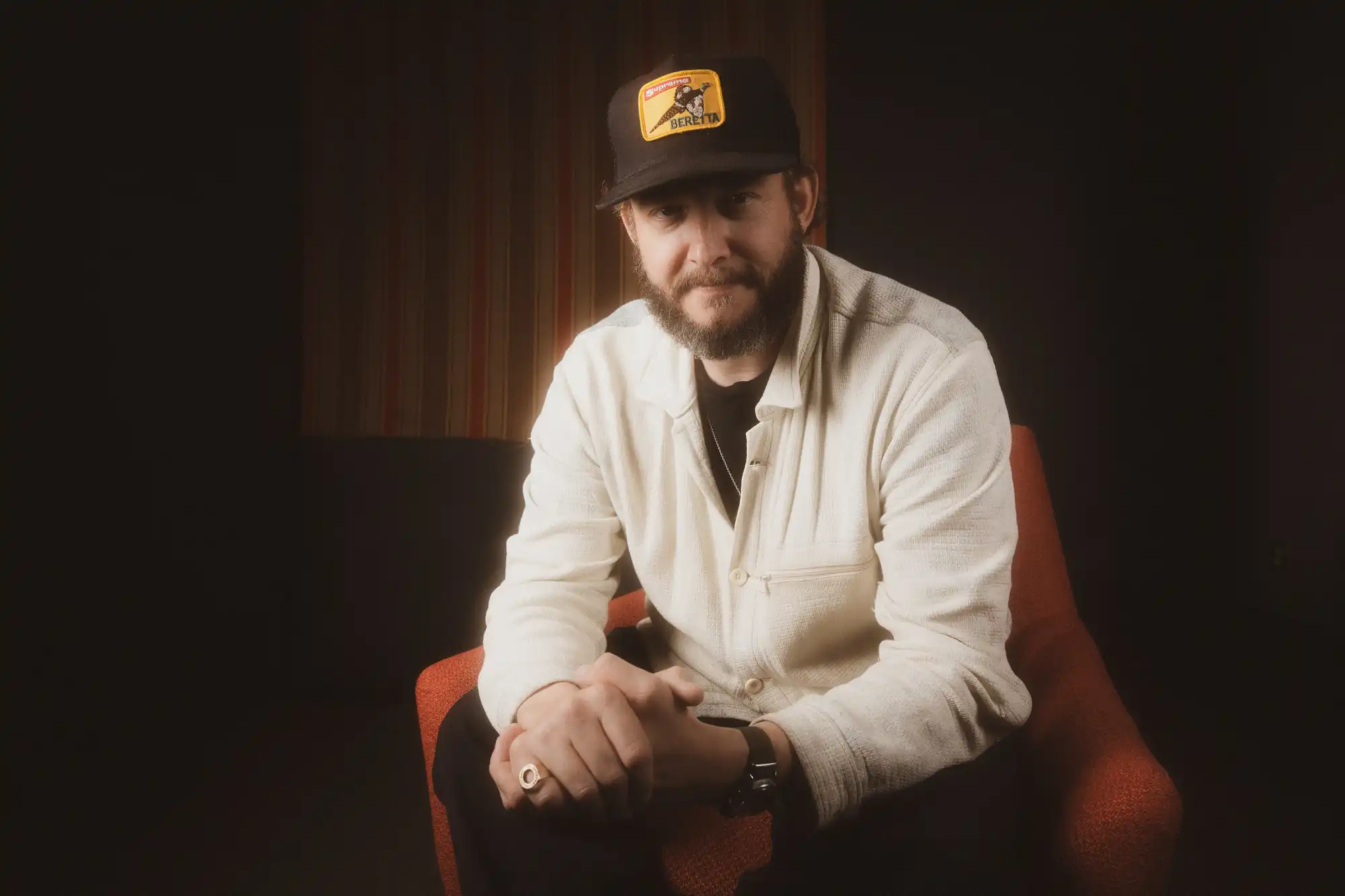
That’s where SABLE, fABLE, released on April 11, comes in. Bon Iver’s fifth studio album, SABLE, fABLE explores Vernon’s growth as an artist and a person. In the wake of the album’s release, Vernon visited The Current studio to talk with host Jill Riley about the album’s significance, and how its making proved transformational. Beyond music, Vernon talks about his involvement with the WNBA’s Minnesota Lynx and a partnership that he hopes will inspire positive transformation in the wider world. It’s just one of the ways Vernon hopes to be of service to communities.
Watch and listen to the interview in the video player above, and read a transcript below.
Interview Transcript
Jill Riley: Hey, it's The Current, and this is a cool opportunity, because I feel like it's been a while since we've caught up as, like—
Justin Vernon: Yeah, it's been a long time.
Jill Riley: ... as The Current. And I've been kind of just, like, immersed in your world of this new record, because I just really wanted to spend some time with it before we sat down. And then I found myself really going back and spending time with my favorite songs from the first record and second record, you know, and so on. But Justin Vernon of Bon Iver, I feel like at The Current, we've kind of been on this journey with you.
Justin Vernon: We really have.
Jill Riley: Yeah! And it's just like a — I don't know, it's really warming my heart.
Justin Vernon: Thank you, me too.
Jill Riley: Yeah, so the, the fifth album, SABLE fABLE, it's out. Thank you for doing the listening party with The Current.
Justin Vernon: That was fun.
Jill Riley: Yeah, we really enjoyed hearing those stories. And you've really been making the the press rounds this time; I don't think I've ever listened to or watched more interviews that you've been in.
Justin Vernon: Never done any!
Jill Riley: Yeah! And you just, but you seem like you're really enjoying it.
Justin Vernon: Yeah.

Jill Riley: You want to talk about that a little bit?
Justin Vernon: Sure, yeah. It is a really different thing. I thought, you know, what kind of halted the touring operation here almost two years ago, and that was really hard, kind of like a runaway train, kind of to slow it down. And I thought, I was going through a lot of feelings and thoughts about what was going to be next for me, and I had these songs, and I thought, well, I might, I might be done with this kind of era of my life, but, you know, I got this song I could just put out a record. And sort of fighting the temptation to get back up onstage and do that, and I just thought to myself, you know, "Why not just concentrate on this thing, this record of songs that I've been working on for five or six years?" And so I decided to do that, and it's been incredibly rewarding. It's shown a lot of ... The signs are showing, you know? Like, my anxiety has decreased tenfold, and I've been able to enjoy the process of putting out a record, whereas most other times it's like, promo, promo, promo; rehearse, rehearse, rehearse. And I've just, like, lost time. I don't think I can really look back at a time where I was present or engaged with the whole process of either, because they're always sort of on top of each other, and so I feel like I've had that time now. And you know, I think there's also a part of me that for years I was pretty anxious in general about being a known person. Really kind of caught me off guard how difficult it was to sort of be known, or to maybe have some of my anonymity gone or to certain degree. And so I think now, it's sort of I've learned to accept that in my life and try to use it for good, and also just to be seen rather than kind of hiding in that way.
Jill Riley: Yeah, and you talk about being in this place where it's feeling more comfortable to be the person to tell your story, which you do with the music, but at the same time, you know, with this album release, it's everything from the preview and the teasers — where you just give just that little bit, that little nugget — the rollout and the visuals. And the release, like, having a big listening party. The people that you partner with for merchandise, which I thought we were going to crack open a can of—
Justin Vernon: Tinned fish.
Jill Riley: Smoked salmon, yeah! I'm like, "Well, come on, where is it?"

But really that that whole piece of it, for you to be at the front of it, to be able to kind of take your fans through what this is all about. You know, it really seems like you put in the work to get to that place?
Justin Vernon: Yeah, I mean, I just wanted to do the things I never had the energy to do. And I think it's sort of like there's an element to being in a band or something that, you know, you don't want to sell out and you don't want to — well, you want to stay cool or whatever that means. And I think I just sort of thought we've been playing it pretty cool these years and trying to stay out of the light and just concentrate on the music and be of service, and run the festivals and just do our thing. But I just thought it would be kind of funny just to have, like, a bunch of products, you know? And just kind of lean into the whole thing. Because even at the smallest level, or, you know, like punk band, Dischord in D.C., or something like, you still end up, you got a logo, you gotta advertise your show and things like that. And so I just thought, you know, let me lean into this whole infrastructure that I've just sort of been trying to walk away from or not be with inside, and just enjoy it, because I don't know, I honestly don't know if I'll do this again. I feel like I've gotten so much out of it and so much out of me in the process. And I was like, "You know what? Let's just — if we're gonna go around one last time, let's just do it all."
Jill Riley: Yeah, it seems like you're very energized by this whole thing.
Justin Vernon: Yeah.
Jill Riley: You know, you're able to tell the story of the album. I mean, when you sit down and you do an interview and you do, like a longer form interview with a podcast, or whatever it may be, you know, the story of SABLE fABLE, like I came to understand, because you were really, you know, as the artist talking about it, came to fully understand what the album is. Because we started playing, when "Speyside" came out, and then we knew an EP was coming, and then it was really, like the EP, but the whole finished album, and, you know, we were kind of scratching our heads, like, "What is this all about?" And then learning that this is really, this is such a story arc, and it's not a character that you've just created, but it's this story arc of who you are. And I wonder if you could talk a little bit about that, because I feel like, as just listening to the album, I don't think it has so much a conclusion as, like, you kind of maybe get on a horse and ride into the sunset, but we don't know which way you're gonna go. I wonder if you could talk about, like, how that transition that we hear musically, stylistically, whatever it is on the album, has kind of been a long time coming for you.
Justin Vernon: Yeah, I mean, I think the album serves as this, like, lookback. The folkier songs are almost more folky than anything Bon Iver's ever done, and probably sounded a lot more like my music did in college or something. I'd gotten better at writing songs and stuff, but in a lot of ways it was like the SABLE EP was very much like, "All right, that's the guy in the cabin." That's who people thought I was, or that I have become, that I've sort of let myself become.
Jill Riley: The expectation, even, yeah.
Justin Vernon: Like I'm the sad guy. Like, that's what we they need from me, and I'll oblige, you know. But all along, kind of struggling, frankly, personally, with just like, not quite felt like I had a really firm grip on who I was and the whole thing, and just sort of having a pretty humble and kind of like, "I don't care too much. I'm just going to stay in my lane," to suddenly feeling like out of control and like I didn't have control over my life, and I didn't really know why and how that had happened. And fABLE serves as that, these last few years, as I've been like, "All right, well, you have to actually show up for yourself, and you might have to give up the things that everyone would think you're crazy to give up"; you know, a touring career, the best band, the best crew. And it did make me feel crazy to to let that go. But there's dividends, and there's so much stuff personally, and that's what the fABLE story is for me. It's like, this is me at my chance of living my life and finding joy. And I've found it, and putting out the record has been such a transformative experience for me. Like, I'm different. I've really healed from a lot of this confusion and bad anxiety, or crippling anxiety — could not leave the house, cancel tours, kind of anxiety — and to be on the other side of that, and to have used music, this thing that really is supposed to be this utility for my heart and for locating truth, is really valuable. Yeah, it does tell that story, you're right.
Jill Riley: Yeah, and it's not as though you just wake up one day and that transition happens.
Justin Vernon: No!

Jill Riley: I really appreciate you talking about that piece, I think especially for creatives or anybody that works in this industry, the anxiety piece is so real, and it takes a lot of work to identify when it's not working anymore. And you actually have to be so active in wanting joy.
Justin Vernon: Yeah.
Jill Riley: And to find it is, it's almost like, quite frankly, it's almost like a miracle.
Justin Vernon: It is a miracle.
Jill Riley: Yeah.
Justin Vernon: And it takes, you know ... I've had friends who have struggled as well, and I just tell them, like, "Every day you didn't give up is another day that that was an action, even if you couldn't do nothing but stay on the couch. That was an action of not giving up." And sometimes it's hard to know when it's time to just work hard and work through a difficult day; that work ethic is a real thing that we should pay attention to as well. But when your body is wracked with anxiety, and your body just isn't working, and it's not working, the first thing to do is accept that, and then the next thing to do is work through it. It takes a long time, takes a lot of vulnerability, and it's not always very fun, but I am very thankful to the people that helped me through it.
Jill Riley: Yeah. I've also struggled with anxiety, and I didn't realize that I had been like pushing what normal felt like to me, like that bar just kept moving in a direction that was like, almost like a constant buzz. But that was my — but that was normal for me, that was my baseline. And then, like, one day it just doesn't work. It's like, "Wow, I gotta do something about this. I guess this isn't normal."
Justin Vernon: I relate. I relate.
Jill Riley: Oh, but like feeling joyful?
Justin Vernon: Yeah.
Jill Riley: It's pretty great.
Justin Vernon: It's like graduation from the dark times.
Jill Riley: It is! I love that. I love how you put that.

Hey, talking with Justin Vernon of Bon Iver; SABLE fABLE is the new record. You know, you've really been making the rounds and talking about the album, but it's really about this time of kind of grasping the opportunity to kind of choose what to do with the spotlight being on you. And, you know, you touched on this a little bit, I've heard you say "being of service." And, you know, I know that you are somebody who's really thoughtful about partnerships and amplifying people and getting people's name out and really putting, you know, care into, I think, how you use the spotlight; like especially now I know you talked with my colleagues at MPR News, Reverb, about a pretty big partnership that you're working on with, quite frankly, a sports team in Minnesota that we can rely on, the Minnesota Lynx.
‘I’m just a huge fan’: Justin Vernon of Bon Iver on his love for the Lynx, new partnershipAnd I just wanted to take a couple minutes for you to tell The Current listeners about this. I think every year, we can say it's a great time to be a Lynx fan, because as we speak, it's June 6, and if I'm not mistaken, the team is undefeated. So you're a fan of basketball, and you go to Lynx games. How do you go from being a fan and going to Lynx games, because you love basketball, to actually like partnering and doing good together?
Justin Vernon: Yeah, well, I've just loved to see ... You know, I've been aware of women's basketball and been a fan for my whole adult life. Shout out Janel McCarville; you know, I had her jersey, her Minnesota Gophers jersey in my closet — still do! And, you know, her being from Wisconsin and playing the game like I would have liked to play, but in the last few years, as the WNBA has really found this like identity, and have started, you know, having their own impact on their own, you know, the teams' communities, and really doubling down on being of service to their communities and making change happen. I just wanted to be a part of that. And I love the team. I love the game of basketball. I love how they play it more than any team I've seen in my life. I can't think of a couple teams that play that well together. I really mean that, and on both sides of the gender coin.

And I think having the chance to to amplify what we've been doing with 2 A Billion, which is our our campaign that we started in 2016, just partnering with local women's shelters, domestic abuse, sexual violence awareness around the world, when we've toured with and partnered in each city with those organizations, that also felt like, you know, now I've got this extra time to focus on with my team, to maybe double down on that. You know, maybe we can team up with an organization like the Minnesota Lynx and, like, amplify what they're doing, and have them really amplify what we're doing. You know, we're really small organization, really, all said and done, and they've got a lot of power and connection and reach. And sometimes, you know, it's just like, "Oh, bearded white guy playing folk music." It's like, I'm not always impressed or final; I don't feel like that's like the final boss, you know? I want to be of service and be part of a team. And so it just seemed really obvious. We just approached them, and it's been — we don't really even know exactly what it is yet, but we've made an impact already. We're raising money, we're raising awareness, and I think it's just the beginning of a really powerful partnership.
Jill Riley: Yeah, I saw a couple of the organizations on the list, and one that really stuck out to me, She Rock She Rock. Like that's — I mean, thinking about that just in the terms of, you know, just talking about music and music education and access to music, that one really just, it sticks out to me in a pretty great way. Yeah.
Justin Vernon: Yeah, I've just, I've never had the time. You know, that's a great example of something that is already happening, that I haven't been plugged into, that I didn't even know was happening. I've been in my own world of touring and everything. And partnering with the Lynx, now I know about it. Now I can show up. And I don't necessarily have to start a whole another organization and clinic on my own.
Jill Riley:Yeah.
Justin Vernon: I can step in and be there. And, you know, right now, we're working on the details of what we can really do to make this year's clinic really special and for years to come.

Jill Riley: Yeah. Hey, talking with Justin Vernon of Bon Iver on The Current. And as I was preparing to talk to you today, I did spend, as I mentioned, just spent some time listening to, you know, songs from For Emma, Forever Ago, and the self-titled record, and 22, A Million and i,i. And it kind of hit me that, talking about those records, and listening to those records, and then taking another listen to the new record, a lot of things just started to, like, really kind of fall into place, because it's, you know, it was 18 years ago that, For Emma, Forever Ago, came out.
Justin Vernon: You said it!
Jill Riley: I know! But I really get when you say that, you know, when that record was connecting with a lot of people. I mean, I was the what? Night DJ on The Current, and when that, it was summertime of 2007; that summer was pretty significant, because, like, my mom had just died, and that first line of "Flume," it was, you know, "I'm my mother's only one." I just went ...
Justin Vernon: Yeah.
Jill Riley: Like, you got me, like, right away!
Justin Vernon: Yeah.
Jill Riley: But I think that, you know, your fan base has been on this, you know, journey with you, whether it was going back to For Emma, Forever Ago, or people that like, have just come to you now. Have you spent — like obviously, probably — because when you think about like your past and then going forward to the future and who knows what that's going to be, did you have any moments that kind of stuck out to you? You know, just thinking back at the music that you've made and the journey you've been on?
Justin Vernon: Yeah. I mean, I really, I do. I feel like self awareness can be a trap, and you can be kind of swimming in your own Kool Aid a little too much. And I try hard not to do that, although it's good to be self aware. And I think observing, you know, me kind of alone, starting again in the cabin, and then getting to i,i era where it's, there's 50, 60 of us, and it's this family, I think in a lot of ways, SABLE, fABLE was my my look back and my look forward.

But really, it's just kind of like this story, there may be more to it. There will be more to it. It just might not be records and whatnot. I just don't know. It just felt like an important thing to be able to, like, "All right, this is just a thing. It's been my entire life, my entire identity, and at times, that has not been serving to me and others." But to set it down and to work really hard at kind of encapsulating what it all meant to me and what music means to me, and the power of it, that's kind of what the record is about, is looking back at those records, at this whole experience of the arc. And I had a Buddhism teacher in college once talk about time, and it's like a circle, but it's also, it's moving forward. It's circles intersecting with each other and moving forward. And every once in a while you come back and you intersect, and you touch where you've been before, but you're still moving forward. And it's a different time that that line's being drawn. And I just think about that a lot. And I think that the things that seem magical about living life and about music, like they're real. They are not just imagined. They're not just like — we didn't build recording studios and start radio stations because it was going to make us money. We did it because it's really powerful. And more than ever, I'm just like doubling down on that and what that can do.
Jill Riley: Yeah, I love that. I'm talking with Justin Vernon, Bon Iver. You know, I think as you've kind of gone along as a singer, a songwriter, a band member, you know, I just feel like there are certain areas of your career where, I don't know, I like to use the word "composer" too. I just, it almost felt like almost watching someone conduct an orchestra at times. And I just wonder, like along the way, you've talked about music influences. And, you know, I've heard you talk about the Indigo Girls; I mean, and I remember meeting them at the Eaux Claires festival when they played Swamp Ophelia, And, like, I just think of the cool things that come out of, you know, you book the Indigo Girls. And then I got to sit down with Emily [Saliers] and talk about that record specifically, and how just having a laugh of like, "Of all the music we've done, he wanted us to play that record!" And they were amazed by, you know, you see them as an influence, like you have your influences.

But I'm wondering at this point — because I don't think our influences ever really change — but at this point, I'm wondering, like, the music that keeps you inspired. Because you've worked with so many different people along the way, and I wonder if there's anyone that you've really been into, or, you know, you've been working with, like Danielle Haim or Dijon, or like, I've heard you talk about Mk.gee.
Justin Vernon: That's my list.
Jill Riley: Yeah, great.
Justin Vernon: That's my list.
Jill Riley: Well, and then we went home!
Justin Vernon: That's my list. Those folks. Tobias Jesso Jr. has been a new collaborator that has really inspired me, but Haim, Dijon, Mk.gee, Francis and the Lights, the list is pretty short of people that I find that are controlling music at a really deep and harnessed level. I just — it's hard to listen to music these days; there's so much coming out, and I get a little overwhelmed, frankly. Bill Frisell is another one that continues to boggle my mind.

But I'm actually finding the inspiration in a lot of different places these days. This guy, Derek DelGaudio, who's an artist who's doing amazing things onstage. I'll leave it to listeners to seek him out. He has a special called In & Of Itself. But like, I'm looking to kind of see what else can you do? Like, all right: bands, music, touring, cool. I feel like we did it at as a high a level as I could have ever — I don't know if I can get any better at that or something. And so I'm looking at how one may be able to change the form, and to mess with the form, to try to make more change, impact people's hearts and minds in a time when, you know, the normal things aren't working. So let's try to do something else. And so I'm looking for inspiration, kind of even outside of just bands and monikers and things like that, and just starting to crack the surface of that.
Jill Riley: Excellent. Justin Vernon, I appreciate you.
Justin Vernon: I appreciate you. Thanks so much for having me.
Jill Riley: Thank you. Again that new record, SABLE, fABLE. We're playing plenty of songs from it. And yeah, it's great to see you experiencing joy.
Justin Vernon: Thank you very much.
Jill Riley: You are listening to The Current.

Credits
Guest – Justin Vernon
Host – Jill Riley
Producers – Derrick Stevens, Nilufer Arsala
Video – Evan Clark
Audio – Eric Xu Romani
Graphics – Natalia Toledo
Digital Producer – Luke Taylor
External Links
Bon Iver – official site
2 A Billion – official site