Interview: The Suburbs on A Pagan Ritual: Live at The Cabooze 1983, and upcoming shows
by Jill Riley and Natalia Toledo
May 13, 2026

The Suburbs are a legendary Minneapolis band who have been a part of the local music scene for decades, and their influence and reach is felt far beyond Minnesota. This week at the Parkway Theater in Minneapolis, the Suburbs will be celebrating the release of a new live album, A Pagan Ritual: Live at The Cabooze 1983, a collection of songs captured during a concert 43 years ago at the landmark music venue located in the Cedar-Riverside neighborhood of Minneapolis.
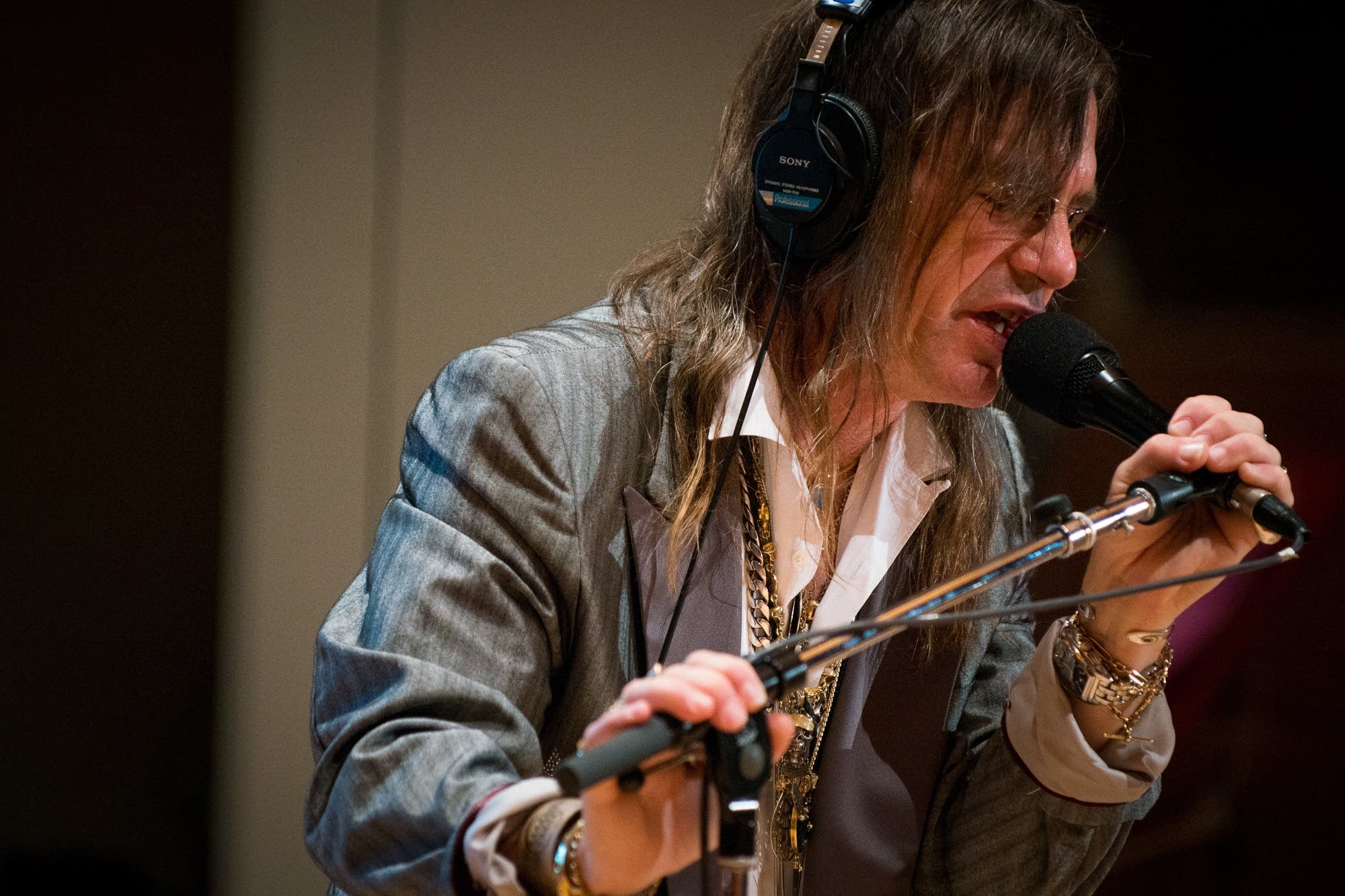
Ahead of the Parkway Theater shows, three members of the Suburbs — Chan Poling, Hugo Klaers and Steve Price — visited The Current’s Morning Show to talk about the band’s history, the newly released live album, and the upcoming shows. Listen to the interview using the audio player above, and find a complete transcript below.
Interview Transcript
Jill Riley: Chan Poling, Hugo Klaers and bassist Steve Price, are here from The Suburbs. Good morning, gentlemen. Welcome to The Current.
The Suburbs: Morning. Good morning.
Jill Riley: Yes, here we go.
The Suburbs: So glad to be here.
Jill Riley: Well, we've got a lot to talk about. With three shows coming up this week at the Parkway Theater in Minneapolis, Wednesday, Thursday, Friday, and a celebration of a new live album. It's called A Pagan Ritual: Live at The Cabooze 1983. All right, here we go, gentlemen. 1983, The Suburbs. Now, for anyone who may not know what stage The Suburbs were at in 1983, can we go back in time to 1983? And just kind of set the scene of where the band was at. Because, as I understand it, you were kind of on the cusp of a change, or maybe just hitting that next level.
Chan Poling: Yeah it's true. This is Chan, by the way, if you can't see me. I was in my mid 20s at that time, and we were just, were we signed to Polygram then? We were working on the record for Polygram. So we must have been signed. Or, you know, sometimes we just record songs and just , hope someone would put it out. But this is, like, kind of the end of Credit in Heaven and the beginning of Love Is the Law.
Jill Riley: OK, so this is kind of where you're transitioning from Twin/Tone to major label.
Chan Poling: Yeah, it was a cusp.
Jill Riley: Yeah. A watershed moment, really. How about Hugo, for 1983 and as far as The Suburbs go, what were things like in the band at the time?

Hugo Klaers: Well, we just were touring a lot, we were spending a lot of time together. We were writing a lot of songs, and it kind of had become, instead of playing around town and having jobs and gigging, that we actually were musicians now and traveling the country, and we were tight. It was fun. We hung out a lot.
Jill Riley: Yeah, and when I think of The Suburbs, as far as your history in Minneapolis, I mean, Jay's Longhorn [Bar] comes to mind. First Avenue comes to mind, but The Cabooze is not exactly the venue that comes to mind first. And so I wonder, making this live album in 1983 playing two shows at The Cabooze, was The Cabooze like a happening place at the time, or was this kind of like a new venue for you guys? What led you to play there?
Chan Poling: I want to talk about that because The Cabooze was not a place that our kind of bands would play, new wave-y, punky bands would play there. It was kind of the bastion of R&B and West Bank kind of stuff. But like, the big acts would come through, like James Brown and CC writers and stuff like that, and I think Daisy Dillman played there in those kind of bands. So to have a kind of a nutty punk band wasn't usual, but God, it was a blast to play. I don't know why we started playing there, but the crowds were just awesome, and was just wild.
Hugo Klaers: We had a really great fan base here, so a lot of people showed up at The Cabooze when we started playing over there. Yeah, it kind of blew us away.
Jill Riley: Talking with The Suburbs this morning. Chan Poling is here, Hugo Klaers is here, bassist Steve Price is here. And Steve, did you have you have a hand in mixing this live album?
Steve Price: So this is probably a year ago, maybe a little bit more, that Hugo had mentioned that Paul Stark, who headed up Twin/Tone, had a hard drive of all this Suburbs stuff all the way from In Combo through Love Is the Law, and in there was that 1983 two shows that they recorded on they had a mobile recording truck.
Chan Poling: Correct, that was, we recorded Credit in Heaven on the mobile truck. So it was kind of the era of the mobile truck, which is just to describe and I want you to continue your story. Paul Stark had got an old RV, and he built a studio in the RV. So there was the decks and all the gear in there, and he would drive up — for instance, the piano parts on Love Is The Law too, and Credit in Heaven were made like at Greenberg's house or my house, just pull up the truck into the driveway and run the cords and then make the piano. So when we got to The Cabooze, he goes, “We'll just pull the truck up in the parking lot here and run out the cords and record you guys.” I was never into the live recording. I always wanted to kind of craft it, you know, but these recordings are awesome sounding.
Steve Price: I was floored, you know, you get hold of all that material and you're like, Oh, my God, what a band. So there were two nights at The Cabooze, so there's some of the same, similar songs, and we've we picked 10 for this record, I think [Peter] Jesperson helped out with the song selection.
Jill Riley: So I mean, you were blown away by what you heard, Steve. And then for you, Hugo and Chan, what was it like to listen back to these live recordings? It had to have felt pretty like, Wow. What a blast from the past.
Chan Poling: It was a blast from the past, yeah. Well, first of all, and I think everyone will notice this, they're freaking fast. We were on something. Maybe it was youth.
Jill Riley: Youth. It was youth.
Chan Poling: Rock and roll. But, yeah, they were just really clipping along. So there's that, they're just really wacky sounding, but the energy was, you can't deny it was really fun. And the band at that time, it was, Beej, Bruce, Michael, me and Hugo. And we'd been playing together for so long that it was very tight. I think you'll hear it. It's super fast and tight and crazy sounding.
Jill Riley: Well, the new live album is called A Pagan Ritual: Live at The Cabooze 1983. Now here's my question. You've got these three shows coming up at the Parkway Theater. I understand that the album will be available there, but when can people get their hands on this live album, if they won't be at the Parkway Theater?

Hugo Klaers: Well, I would imagine, if it's here today, like Copycats says it's going to be, that our guy, Jeff, will have it in the stores by the weekend.
Jill Riley: Very nice. Well, why don't we listen to one of the songs and when I took a preview of this song, I did happen to note that it was faster than I have heard it before. So this was recorded live at The Cabooze 1983. It's a song that Suburbs fans are pretty familiar with, and it's the song "Waiting." So can you guys talk about this song in particular. How long had you been playing this song? How new was this song? Because this is what, 1983 and "Waiting" first showed up on the Dream Hog EP, if I'm not mistaken. Can you give a little just background about "Waiting"?
Chan Poling: You got the story about the title.
Jill Riley: Oh, yeah, Hugo, you got to tell the story this.
Hugo Klaers: You'll hear Chan introduce this as "Full Moon." But Steve Greenberg was working with us, and he said it was a hit, but we couldn't call it "Full Moon," because we would ruin it. And he said, full moon's not even in the song. Why? But we were artists and then look what we came up with for the name. We just, "well, we say, waiting."
Jill Riley: Yeah, sometimes the obvious answer is the right answer. Well, I'm here with The Suburbs. We're going to talk a little bit more, but first, take a listen to a live recording of "Waiting" from The Cabooze 1983 and it's on The Current.
Jill Riley: The Suburbs recorded live at the Cabooze 1983 with "Waiting." So I'm here with bassist Steve Price and Chan Poling and Hugo Klaers are here. And I just, I want to pull back the curtain for a second here. It was really fun watching Chan and Hugo fun watching you guys listen to that recording with headphones on. What's your reaction to sitting here in the studio, and you were just like — I could see and hear you reacting to certain parts of that recording?
Chan Poling: Yeah, I haven't really sat and listened. I'm loving it. Hearing all these different parts. It's, yeah, awesome.
Hugo Klaers: I just have to say that the band was especially tight. But Bruce Allen was really a special and gifted guitar player, and just when you hear this and what he's doing, and he just plays a million miles an hour, it really added a lot to the band. Really did.
Jill Riley: Yeah, and just hearing those vocals, everything was very clean. I mean, you were saying that, Steve, that you were just really blown away by the recordings.
Steve Price: Oh, yeah. And again, there's, I mean, there's a lot of material, so.
Chan Poling: We went through a lot, yeah. How many "Waitings" did you listen to?
Steve Price: Well I think there, well, you did one, I mean, there was, maybe this was the only one time you played it like, I think the first night, wow, yeah. And the song must have been fresh, even though you guys, pretty much, destroyed that. That's why it was so good.
Chan Poling: It sounded like we knew what we were doing, yeah?
Jill Riley: Well, I mean, it's one thing to record it in the studio, but then to play it live. And Chan, you had given the heads up that, you know, it's like we played it really fast and Hugo, you pointed out that it seemed like you were even picking up the pace as you were listening to the song there.
Hugo Klaers: Yeah I think, you know, excitement. There was a lot of excitement in the air that night.
Jill Riley: Or maybe did you guys have to be somewhere? Like OK, we’ve got to play faster.
Chan Poling: Hit the bar after.
Hugo Klaers: To be honest we were home. We had been out east and playing for like three weeks. Yeah, we were home.
Chan Poling: This was our homecoming gig.
Hugo Klaers: Like I say, our fans were always there no matter where we played. And so it was — we were psyched.
Jill Riley: Yeah. The live album is called A Pagan Ritual: Live at The Cabooze 1983. There are three shows coming up this week, The Suburbs at the Parkway Theater, Wednesday, Thursday and Friday, which, by the way, you can go to our concert calendar, an easy way to find more information at the current.org/giglist. Hugo and Chan. I mean, you guys were talking about, your late friend and band member, Bruce C. Allen, and just what a genius guitar player. When you listen to those recordings and hearing him play. And also, you know, just last year, you guys losing Beej Cheney, which I'm so sorry for your loss as friends as, I mean, you know, practically brothers, I'm sure, and bandmates. And listening to these recordings and just listening, again, to those growls and those screams. I mean, it has to be, I would imagine, when I look through a photo album and I'm seeing pictures of people that are no longer with me in this life, and then just looking at the picture can just evoke so many different feelings. But then, I don't know, for you guys, listening back to a live recording made in 1983, that's got to bring up some pretty good feelings of some really good times with the band.
Chan Poling: Yeah, yeah, it was. We were a band of brothers for a long time. We pretty much were on the road playing for a decade solid from ‘77 to ‘87 definitely. And then we kind of kept on going till early ‘90s. But that particular lineup was powerful. We were lads together.
Jill Riley: Yeah, yeah. Hugo, what do you have to add to that?
Hugo Klaers: Well, I just want to add that those were really, really special moments. But Chan and I are both really proud of the new band. We sit down every fall and say, "Well, what should we do? Should we stop this?" And the first thing out of our mouths at our lunch meeting is "we have a really great band now." So I would like to say that it's just as exciting today as it was in 1983 to be in The Suburbs.
Chan Poling: A little more a little more sober.
Jill Riley: Yeah, that comes with time and experience, I'm sure. And you have picked up some great players along the way. You know, guitarist Steve Brantseg, I think is an incredible player. You have a bass player that's been playing with you for a while that isn't too shabby himself. Steve Price, who has is with us this morning on The Current. And you know, Steve, you stepped in recently on a gig. It's funny that you guys are here, because not long ago, Chris Osgood and Dave Ahl were here from The Suicide Commandos, and we were talking about you guys, but they told some really great stories of, kind of the origin of their involvement with The Suburbs, and kind of introducing some folks to each other. But it was cool to see, Steve Price, to see you on stage with The Suicide Commandos, because you got a call like, hey, we need somebody to fill in. And you got the call and, I understand that it's kind of a similar call that you got with The Suburbs, like, "Hey, man, we need you. Can you be ready?"

Steve Price: Yeah, with The [Suicide] Commandos show I was actually on an airplane, and I got a text from Dave, saying, “Hey, call me.” I said, well, I'll be landing in a couple hours. I'll give you a call. And I actually called him the next morning. I thought, oh, you know, maybe they want me to record the show or something. And then, yeah, they asked me to jump in at the last moment.
Chan Poling: Learning all those songs.
Steve Price: Yeah, yeah. It's my superpower. And it was a thriller, absolutely.
Jill Riley: And so, when did you join up with The Suburbs?
Steve Price: 2009. It's kind of a similar thing. I got the call maybe 48 hours before the big First Avenue, the Bruce Allen tribute show. Kind of the band getting back together after, I don't know how many years.
Chan Poling: Decades, really. I didn't think we'd ever get back together. And I have to credit my wife, Eleanor, at the time she goes, "Why aren't you guys playing these songs? You know, people love, ‘Love Is the Law’ and ‘Rattle My Bones.’ And, you know, why aren't you playing these?" I'm like, I don't want to. Bruce is gone, and Michael was out of commission with arthritis and stuff like that. And the band had kind of drifted away. But when Bruce — who mentioned that we did a tribute to Bruce, when he passed away?
Steve Price: Yeah it was 2009 — that was the show. 2009.
Chan Poling: And it was going to be a First Avenue. And so I thought, well, we'll put the band together, but we need to get a guitarist and a bass player. So I asked my pal, John Munson, who I've been playing with in The New Standards for a while. And he goes, "I don't know. I don't think I can do it." And then Steve Roehm and John Munson, my New Standards buddies, go, "You know who's really great, is Steve Price. Steve Price would be the guy to call." So they suggested him and John Munson has been pissed off ever since that he didn't do it.
Jill Riley: Well there you go. There's the lesson. When the question comes in, you say yes, you say yes. And the horn section, and again, the folks who have been kind of along for the ride of The Suburbs, from then until now, I have seen just some really, really fun shows from you guys. And you've got shows coming up this week, the Parkway Theater, Wednesday, Thursday, Friday. And there's the new live album, A Pagan Ritual: Live at The Cabooze 1983. Well, I say that we hear another song from the live record. And I wonder if you could talk a little bit about the the song "Tiny People." So this was on the debut In Combo, and this is one of the songs that's featured on this live record. So I don't know who wants to jump in first, but "Tiny People," it made the cut, and it's a song that fans of The Suburbs would know, but I wonder if you could give a little context behind the song.

Chan Poling: Well, first of all, when I heard it on this new we hadn't played it for years and years and years. It was a song that Beej did. And for a long while, in the new band, the new iteration, my rule was that I'm not going to sing Beej songs just because he was still around, but when he passed away, I thought, well, I'm going to sing all the songs now, you know. There's no way I can approximate his style or anything, but at least we can fold those back in and kind of honor them in that way, and get those songs back in. So I thought, let's do "Tiny People" because I just love that tune. I think the closest thing I can say about where that came from was, that was early ‘80s, and I was a huge Talking Heads fan, so that's what I think that groove is New York, you know, and we were buddies with The Wallets, and there was this whole kind of punk funk thing going on that I love that whole thing.
Hugo Klaers: We're actually doing this foray into that kind of disco sound.
Chan Poling: Yeah, yeah. Really, this is our beginning into it
Hugo Klaers: Transitioning out of the punk into the funk.
Chan Poling: I think everyone probably who knows the band knows that we went from thrashing kind of court straight ahead punk to kind of a little bit more dance stuff, dancey kind of stuff. And that was one of the intros to it.
Jill Riley: Well, let's take a listen to it. All right. We'll do that. The Suburbs, live in the studio on The Morning Show. And this one is a live cut from the new live album, Live at The Cabooze 1983. It's "Tiny People" on The Current.
Jill Riley: Hey, yeah, that is called “Tiny People” from The Suburbs, A Pagan Ritual: Live at The Cabooze 1983.
Jill Riley: Well, those were some hooting and hollering, those screams. It's like, who else could possibly do those screams? Have you been warming up, Chan?
Chan Poling: Well, like I said, I'm not going to do Beej.
Jill Riley: Right, because who could?
Chan Poling: It's a different vibe right now, but, yeah, oh my god, I'll do my best.
Jill Riley: Yeah, you'll do your best. It's fun to watch you guys listen to these songs. Chan Poling, Hugo Klaers, and bassist Steve Price, are in the studio. You know, it's just Hugo, I see you are almost getting a kick out of this with just with how fast you guys are playing these songs.
Hugo Klaers: Yeah, because when we played them back then, it didn't feel like it. But when you hear this stuff, when you see the live video from M80, which we played at 11 o'clock in the morning, you just go, oh my god.
Jill Riley: Well, the shows where you will be playing this week at Parkway Theater, Wednesday, Thursday, Friday. Can you give a little preview? I mean, what are the shows gonna be like? What are you planning for this week?
Chan Poling: Well, we're gonna, for some reason, we decided that this is gonna be like a big, grand retrospective, not just a regular gig. So we're gonna do three nights. And what happened was, we were gonna do certain albums one night. But what happened was, all the fans, the first show sold out, the second show sold out. Then we added Wednesday, and people are going, "well, what? What am I gonna hear?" You know? So we decided that we're just gonna be a free for all every night. And it's gonna be very like — we'll do "Tiny People," we'll do stuff from the Red record, which we recorded when we were teenagers, and stuff from the new 21st century. That's why it's called Two Centuries of Rock. So we're gonna do 21st century stuff, and 20th century stuff.
Steve Price: There's some brand new, yeah.
Chan Poling: Yeah got a brand, brand new song,
Jill Riley: OK, this just in.
Chan Poling: And some really weird old ones too, that you never haven't heard since the Longhorn days.
Hugo Klaers: So people don't get confused, too. We're gonna do two sets and kind of stretch it out and give them a little more music. We're gonna cover all 48 years.
Chan Poling: And Max Ray is gonna be there. He'll be screaming on the saxophone.
Jill Riley: 48 years.
Chan Poling: Yeah, is that how long we've been doing that?
Hugo Klaers: Someone told me next year, 2027, will be 50.
Jill Riley: Oh, well, you know what? Chan's reaction was just erased by the power of the radio and my quick hands. Oh my gosh, maybe we should just drop that news on you this early in the morning. Chan Poling is here. Hugo Klaers is here. Steve Price playing bass with The Suburbs for a number of years now, too many years for Chan to handle this morning, even. Parkway Theater, Wednesday, Thursday, Friday. Go to the current.org/giglist. You can find more information about those shows, and you can find the new live album at that run of shows at the Parkway, A Pagan Ritual: Live at The Cabooze 1983. We'll go with one more here. It's a real quick one, believe it or not, it's a real quick one, but it is a shorter song. And there are so many of those songs that you were talking about, like the beginning of The Suburbs of these like really, kind of like loud, fast punk before you kind of had settled in and gone more into the direction of, like a danceable New Wave. And this one is called "Black Leather Stick." Can you give just a real quick setup for this one?
Chan Poling: “Black Leather Stick” is not what you think it is. It's a stick shift in a car.
Jill Riley: OK, yeah, I had to listen to the song to change my view of what I first thought it was OK, yep.
Chan Poling: We're in a family show, yes, but yeah, so it's about cars, and it is fast, and I think it's from — what record is it from? In combo, yeah, the first record.
Jill Riley: All right. Well, thanks you guys. Have a lovely day. Thanks for stopping by The Current.
The Suburbs: Thanks for having us. This is really great.
Jill Riley: All right, you're listening to The Current.
Credits
Guests – Chan Poling, Hugo Klaers, Steve Price
Host – Jill Riley
Producer – Nilufer Arsala
Digital Producer - Natalia Toledo
External Link
The Suburbs – Official Website
The Suburbs at Parkway Theater - Event Page