Interview: Linda Perry on her musical journey, new music, and the future of 4 Non Blondes
by Jill Riley and Natalia Toledo
November 11, 2026
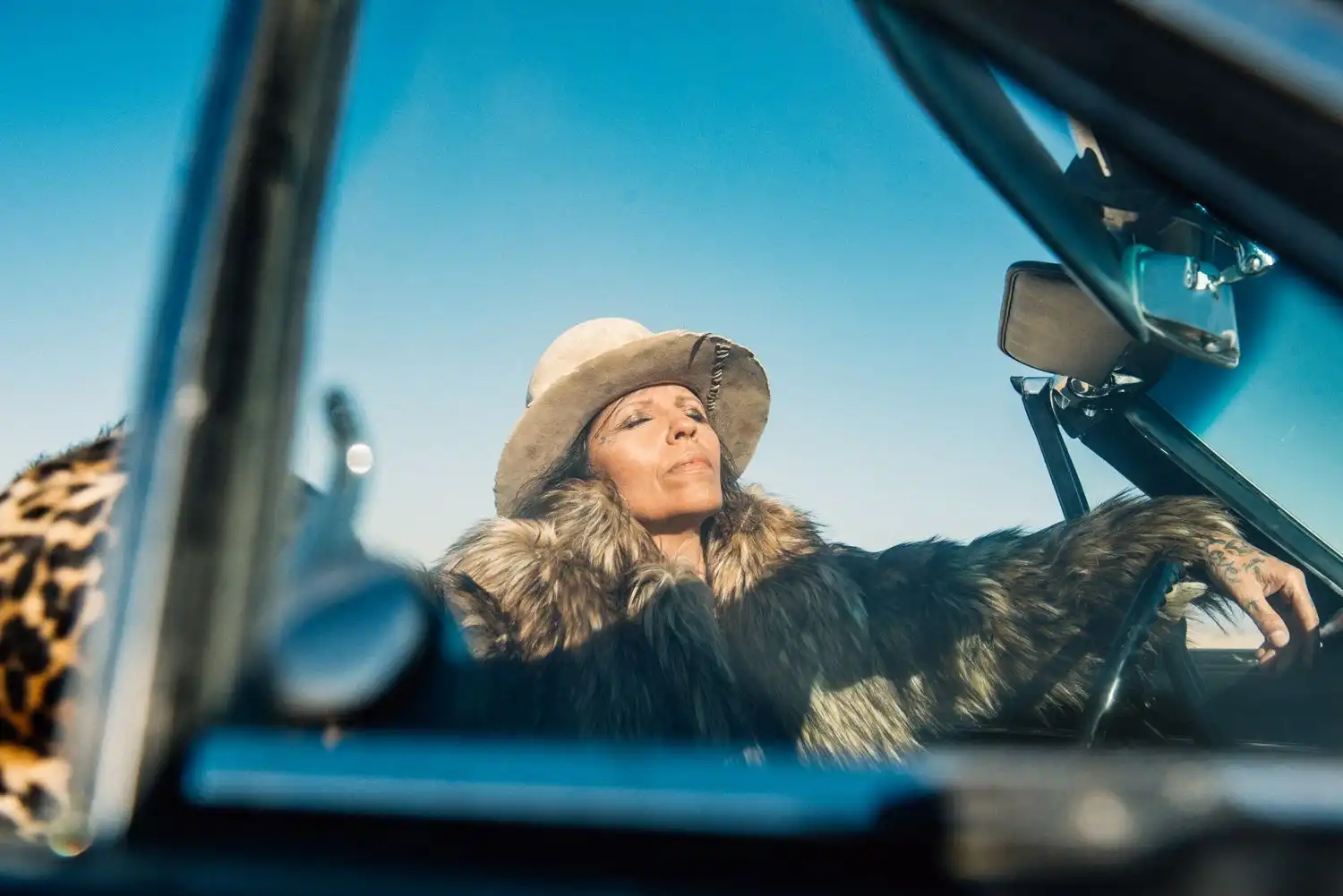
Legendary songwriter and producer Linda Perry talked with host Jill Riley about her documentary and album Let It Die Here, her musical journey, new music, and the future of 4 Non Blondes.
Listen to the full interview in the player above, and find a complete transcript below.
Interview Transcript
Jill Riley: You are listening to The Current, I'm Jill Riley, and I have a special guest in the studio and a guest that I've had the privilege to connect with before. Songwriter, super-producer, member of 4 Non Blondes, Linda Perry, welcome to The Current.
Linda Perry: Well, thank you. Yeah, we did talk a while ago, and I was right in the middle of doing my solo record.
Jill Riley: Yeah, so the documentary is called Let It Die Here, but that's also the name of your album, and the album is out. I realized in the second listen when I listened from beginning to end, there's such a narrative running through. I mean, it's really like I was sitting through an entire story. So, can you talk about what your goal was with the record?

Linda Perry: I honestly didn't have a an intention, an idea, or a goal. Like the goal was, can I write a song? And yes, I can write songs. I know that. But sometimes it just takes a different heart, a different emotion to write something for yourself. The documentary was responsible, the inspiration should I say, to make the album because once I started understanding what was going on in my story with my mom and my personal struggles it kind of informed me, “oh okay so I wrote one song, then I wrote another one,” and they all seemed to keep carrying a certain thread of information, and they showed up the way they did, and I just wrote it, and I didn't edit, I didn't try to overthink. And I wasn't intentionally trying to write a story; just kind of came out that way. And so, when I put all the songs together, it was really easy because I would just listen to the songs like, "Oh, here's the beginning, Balboa Park," when life was really simple for me as a kid, even though I was completely a drug addict on acid and mushrooms, and you know, drunk and coke and crystal, everything you can think of was happening at Balboa Park, so I knew that would be the beginning because that was my happiest time.
Jill Riley: Yeah, isn't that funny to think about? Like it was a simpler time. But that time only lasts for a short amount; it only works for a certain amount of time. Yeah, when times were simpler, I love that. But I mean, as the record progresses, God, there was a song that was like a gut punch, but it's so powerful because I hear you taking power back. The song "Is That All You Got?" Can you talk about that song? Because I just went wow.
Linda Perry: Yeah. I thought that was an interesting one because I've never heard a song so specifically pointed at something or someone, and what a powerful statement! "Hit me, mother. Is that all you got?" So, when we were younger, my mom was very abusive to us, and I don't think she thought it was abuse. I just think that it's the way she punished. Her punishing was very hard, and so we got together as a family and said, "Okay, I think if we stop crying, she'll stop hitting us." So we kind of consciously made a decision, all the siblings like, let's just stop crying, and see what happens. So one by one, we would do that, and she would get angry for a moment, get angry and angry, and then stop, and then that was it. She never did it again. So the song was based on that. Like hit me. Is that all you got? Because I'll take it all. Just keep doing it, and there's nothing. Your deceit, your lies, your abuse, nothing that you have is going to take me down. You know, so it was me mocking her.
Jill Riley: Just to think of you guys had to come together and formulate this plan. There is a sadness in there, but at the same time, just thinking about how you were able to overcome and defeat the monster that was coming out in your mother.
Linda Perry: And I think what it really comes down to is, my mom was flawed. She was flawed, and I know she cared. I think that sometimes when you go into survival mode, you forget how to be tender because you're just surviving.
Jill Riley: Yeah.
Linda Perry: So even though she was fighting and doing stuff to to take care of us, the tenderness got lost. I think that kind of weighs on a child. At some point, we're like, "When do the hugs and kisses and how was your day come in?" But if you don't know that, you don't know what you're missing. It's only till later do you go, "Oh, oh, okay, that was wrong. You know that wasn't very kind.”
Jill Riley: Yeah, I'm talking with Linda Perry, and we've been talking about a few of the tracks from Let It Die Here. It's the name of the documentary. It's the name of the solo album. It's the album that came out in the springtime. So, Linda, I've been spending time with a couple different eras of your career, the song "Beautiful," hearing you sing it is such a different experience. And listen, the Christina Aguilera version is beautiful. And I don't know Christina Aguilera, but I have to think that she was under a lot of pressure and a lot of scrutiny. So it is a very honest expression of the song, but there's something about the passage of time and the way that you perform it felt really real to me. I love that you recorded a version of your own song for this record.
Linda Perry: When I wrote that song, I was having confusion of what it was about, because you instantly go into "why am I singing about I am beautiful? I don't think that at all." So when Christina heard it and she wanted to do it, I was very very confused. Like what? You're gonna go sing a song about how beautiful you are? Weird. And so I mean, I struggled with that too. But like, I'm just gonna listen to her do it. And when she came in, I let her bring a friend in, and I normally never let you know the posse's and managers and labels come into my studio. And she said, "Can I just bring a friend?" I'm like, "Sure." So she brings her friend. I start the recording, and then she's like, "Don't look at me." To her friend, she's like whispering to her friend, "Don't look at me." And as soon as she said that, I understood what the song was about. It was about not feeling that. And whenever we do have these moments where we want to shine, how people can come in and take you down. It's about I'm shining now, please don't take that away from me. You know you're shining now. Let's just hold on to it. We all are shining. Just don't let someone's words take that away, and that's what the song is about. It's about being insecure, about finding, trying to find your way, about being lost and confused, and friends thinking you're always in doom. All of that, so when I sing it, I sing it with doom. I sound sad.
Jill Riley: And maybe that's it, and maybe that's what it is.
Linda Perry: And my voice is lower. You know, Christina's amazing, but I'm raw. Raw will always win to my ears.
Jill Riley: Talking with Linda Perry, I’m Jill Riley. Let's go back to the '90s, shall we? I went down to my basement and I was digging through my boxes of CDs, and that was like a time capsule. I pulled out the album Bigger, Better, Faster, More. I was listening to it. The opening song "Train," like man, that harmonica and that driving blues sound, and then "Superfly," it was funky as hell. I was just like the slap bass, was blowing my mind. "Pleasantly Blue," I remember that 12 bar blues sound, and and what was it? Old —
Linda Perry: "Old Mr. Heffer."
Jill Riley: Thank you. It was like a hot rod rockabilly song.
Linda Perry: I know
Jill Riley: It didn't occur to me at the time how many different experiences I was having because to me it was just music. When you guys were making that album, was there kind of "This represents who we are. We aren't just one thing."
Linda Perry: The question itself poses two different reactions. One, that's what I loved about it. Two, that's what I hated about it.
Jill Riley: Okay.
Linda Perry: I didn't feel we had a through line. We weren't consistent. The live experience and the album were two different —
Jill Riley: different worlds. Two different worlds. Okay.

Linda Perry: Live, we were rocking. It all had this consistent sound, and the album I put that on the producer. It's a producer's job to bring consistency to an album. And in this situation, I didn't know, I wasn't a producer then. I didn't know. It was first time I'm in the studio, and having this experience, all I can go is listen to it and go, "why do those songs sound way better and more consistent live than they do in here on the record?" And that was one of my biggest issues about the record. We weren't given a sound. In fact, we had a sound, but it was taken away in the studio. We had a live sound, it was thunderous. It was exciting. It was raw, and it was messy.
Jill Riley: Yeah.
Linda Perry: Right. Once we got in the studio, we don't know. We don't know. I'm a kid. I had no idea. You look at these producers to help you with this because that's their job. So that's all. It was just a case of what we recorded wasn't really who we were, and I think that got lost. And "What's Up" I wanted to leave off the record and save it for the second record. And everybody thought I was insane, and I said, "Listen, this song is bigger than us. It's bigger than this record. It's going to be popular next year, the year after that, five years from now. This is a classic. So I recommend that we keep it off the record because if we put it on, that's all we got. That's going to take over. If we keep it off, we can still grow and build." Label thought I was insane. Band thought I was insane. No hands went up for me and my vote. So you know that's the way it rolled.
Jill Riley: It really sounds like from that experience, that was your jumping off point to the next step.
Linda Perry: What I learned from that experience was that I cannot trust anybody with my vision and my creativity. Incredible gift to walk out with. Ever since then, I just started buying gear. I started really paying attention, asking lot of questions, and ultimately taught myself how to engineer, patch, and understand what all that stuff does in a studio. Then, as a producer, my job was to create continuity. I mean, I learned so much through other people's mistakes. That was the catalyst of all my surviving skills from my mom. I learned so much from her mistakes, and which has made me, I think, a pretty decent mom. Think I'm pretty good, but it was her mistakes. So through producers and other musicians and whatever, I've just been taking things that I felt like were flaws on their part and trying to perfect them for my creative.
Jill Riley: The way that you've been able to do that, it's almost like, why doesn't everybody learn from the mistakes they observe? You know, but you've really been able to do that. And after all this time has passed since that one full-length record from 4 Non Blondes, it's my understanding there's something possibly?
Linda Perry: You know every year it's like somebody came and said, "Would you ever put 4 Non Blondes back together?" And I'm like, "No, it's never going to happen. I'm never going to put 4 Non Blondes back together." So you know, cut to 20 something years later, I'm like in this time about letting go, letting go, and why put limitations? Why? I'm old now. Like why not just try to go for it and have fun, Linda? Have fun. I just put it out into the universe. Okay, I'm gonna put 4 Non Blondes back together. I get a call a week later from my manager, and he's like, "So I have an interesting offer." As soon as he said that, I'm like, "Oh, there's gonna be an offer for 4 Non Blondes." He has no idea I emotionally have made amends with my “never” and decided that I would put the band together. So he's like, so BottleRock reached out and they made an offer for 4 Non Blondes to play. And I'm like, oh, that's so interesting. And I started laughing. And he's like, what? I go, I just basically told the universe, I'm going to put 4 Non Blondes back together. So anyway, so I called one by one, the band because I don't talk to everybody. So one by one, I called them. I said, "Listen, there's this opportunity to play BottleRock, but I can't say yes until we meet. I got to see if we have a connection still." So I go to San Francisco. We meet in rehearsal room. We got vibes. Things are cool. And then I said, "Listen, here's the plan. We're gonna play BottleRock. If you guys want to do it, they're like, 'Yeah.' But we're not gonna play any of the songs from the album. We'll play "Train" and we'll play "What's Up." I said you have to understand. I can't be 60 years old and singing "Old Mr. Heffer" and stuff like that. I just can't. I won't have fun, and there's no reason for me to do this if I'm not gonna have fun. So I said I'm gonna write a whole new album, and I'm gonna write it for the audience in a festival mentality. So that's what I did. I'm like, okay, I'm gonna write a bunch of really cool '90s rock songs. In a festival, when they don't know what I'm saying, they don't know these songs. I got to get them jumping in somehow. So I'm going to write these choruses really simple. I had a blast writing it, and that's what we've been playing. We played like 10 festivals, all new songs except for "Train" and "What's Up," and people stuck around, and they did. By the second time the chorus came around on the new song, they'd be like singing along. So we went in the studio. We recorded that. It's being mixed right now, and we're going to go out on tour in I think beginning of March with a live and STP. And so yeah, and we're going to release the record at the top of the year, and it has my Linda Perry staple, let's get serious stuff, but the majority of it is just dumb and fun, and I love it. It's a great record.
Jill Riley: Great, we need some of that.
Linda Perry: And I want to call it 1994 because that's when we would have released our second record.
Jill Riley: So was that about the time where it's like, things just weren't meshing anymore?
Linda Perry: Yeah, what happened was I just wasn't having fun.
Jill Riley: Yeah.
Linda Perry: And we toured for I think it was like a year and a half. We toured like crazy. I just stopped having fun. I'm young at this point, and I don't want to be told what to do, man. I don't like it. And then people are telling me what to do, and I just did not like that at all. And I'm like, I want to explore who I am as an artist. I may have started here, but I'm not ending here. So we started working on the second record. Label loved it, band loved it. I hated it because I just wrote songs that they wanted me to write. So there was the big fault right there. So just let me write what I want to write, but everybody wanted to kind of give me direction. So I started writing for them. Anyways, I told the label I'm out, I'm done, and they dropped the band, kept me, which was not my intention. And then I struggled a couple years with that label until I threatened I was going to kill myself if they don't let me out of the deal, and I did. And I threatened my A&R guy that he was going to get a call about how Linda Perry killed herself and left a note directly to you.
Jill Riley: Oh boy! Oh boy!
Linda Perry: And he let me go.
Jill Riley: Okay yeah, that probably put some fear in him.
Linda Perry: And then that's when it all started as the producer part.
Jill Riley: Yeah.
Linda Perry: So you know, Jill, all I got is my instincts. I can only go on my instincts, my gut feeling, my intuition, and I knew I needed to get out of that band because there was something bigger waiting for me. And my life has been so big, and so many incredible ups and downs, and sideways and backwards, and oh my God, tumbling! But I keep landing on my feet, and it's exciting. It's tiring.
Jill Riley: Yeah.
Linda Perry: But exciting.
Jill Riley: Yeah.
Linda Perry: And I needed to go through all that, and so yeah, full circle. 4 Non Blondes back together after 30 years, incredible record. We're playing amazing shows, and I'm a great performer. I love performing. I do. I love it.

Jill Riley: I hope that there is the potential of you coming back to the Twin Cities.
Linda Perry: I will.
Jill Riley: Okay, because —
Linda Perry: You know what? I will if you ask me to, and we'll all sit in here and we'll have a big kumbaya moment with you.
Jill Riley: I would. I'm not kidding. I would love that. So I will. I'm asking you now. Will you come back to the Twin Cities?
Linda Perry: Yes I will.
Jill Riley: Thank you very much.
Linda Perry: You have my word on that.
Jill Riley: I would love to meet everyone and get everyone to sign my CD of the first CD when I switch from cassettes to buying CDs with my own money. I mean, that holds a really special place in my heart.
Linda Perry: I know, right?
Jill Riley: Oh, Linda, we could sit and talk all day. I wish we had the time to, but we do have time in the future. When the rest of the band comes with you and comes back to The Current.
Linda Perry: Look how you just spun that back around.
Jill Riley: I don't forget things.
Linda Perry: You heard it first right here.
Jill Riley: We're looking forward to it.
Linda Perry: 4 Non Blondes is coming.
Jill Riley: I love that you were here. Thank you so much for coming by.
Linda Perry: Thanks for having me.
Credits
Guests – Linda Perry
Host – Jill Riley
Producer – Nilufer Arsala
Digital Producer - Natalia Toledo
External Link
Linda Perry – Linda Perry Studio