Interview: Andrew Bird on performing with the Minnesota Orchestra, and his Twin Cities ties
by Jill Riley and Natalia Toledo
November 18, 2026
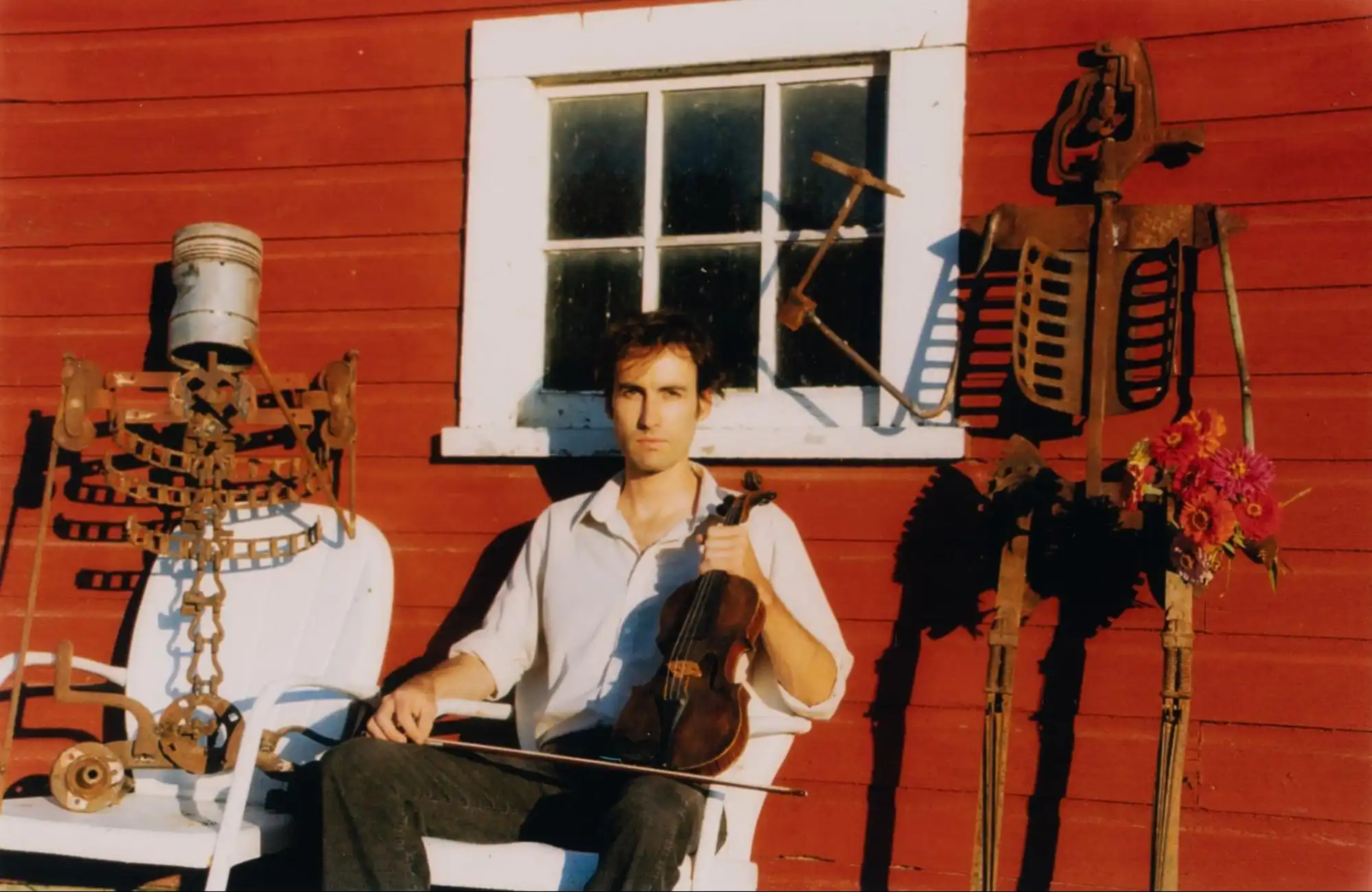
Singer-songwriter Andrew Bird spoke with host Jill Riley about the 20th anniversary of his album The Mysterious Production of Eggs, and the upcoming performance of the album with the Minnesota Orchestra on Saturday, Nov. 21.
Listen to the full interview in the player above, and find a complete transcript below.
Interview Transcript
Jill Riley: You're listening to The Current, I'm Jill Riley. Well, what can I say about Andrew Bird? There's no one like him. He's a songwriter, a classically trained violinist, and one who I think has experimented with a number of ways of performing, using the violin, incorporating that into his songwriting, a multi-instrumentalist. I don't try to use overuse the word eclectic, but I think it really applies here. Just the mix of styles of music that he has combined throughout his career — indie, folk, blues, jazz, classical, you name it. And Andrew Bird is performing — I think it's a very special album, just thinking back, even to the beginning of this radio station, the first year The Current was on the air — we were playing quite a few songs from Andrew Bird's The Mysterious Production of Eggs, and that record turned 20. Andrew Bird has been on the road with a really special way of celebrating the anniversary of the record, and Andrew Bird is on the line. Thank you so much for taking the time to check in with The Current.
Andrew Bird: Yeah, of course, glad to be here.
Jill Riley: So you will be performing the record with the Minnesota Orchestra on Saturday, November 21, and this isn't the first of the performances. You have been performing with a variety of orchestras as you've been celebrating this record. I want to ask you about the process of transposing an album to an orchestral score. Like, who does that work? What is the process of transposing an album into a full score made for an orchestra?
Andrew Bird: I was classically trained, and I went through conservatory and everything, but I kind of stay in my lane as far as this goes. Actually, it's a Minneapolis-based arranger named Nate Thatcher, who did The Mysterious Production, and the album is pretty dense and detailed and somewhat orchestral to begin with, but it's a lot of very tricky, detailed work to give everyone the right role. And it's a 50-piece orchestra, but we approached this like the orchestra is my band. When a show goes really well with an orchestra, you're like, “yeah, they were a good band” because it's just me up there. I don't bring any rhythm section, so we're trying to make the orchestra work. It's an immense challenge to have that all come together, day of show, like build a whole show from scratch in a few hours. But if it's really orchestrated well and the orchestra is solid, then it works.

Jill Riley: The Minnesota Orchestra will be Andrew Bird's band coming up at Orchestra Hall, conducted by Sarah Hicks, and Andrew Bird will be there as the full album will be performed, Andrew Bird's The Mysterious Production of Eggs. Andrew, you were talking about how it's tricky, detailed work, and that's kind of my understanding of the making of the record to begin with. It's such a layered record, and when I listen to it now, over 20 years later, there are little pieces that I'm still kind of picking up on when I listen to the album, and I just wonder if we could go back to the creation of that album, because it's an album that feels like it was made for this kind of presentation or this kind of performance, even though you had less instruments and less musicians to work with, because I know you as an artist and musician who has incorporated a lot of the aid of technology, like looping and multi-tracking, to create this really dense sound. So can we go back to the creation and ideation of this album.
Andrew Bird: Yeah, I mean, I was just now reminiscing what I did in Minneapolis when this album came out, and it was a much scrappier time. You know, I was either playing solo or duo. I remember the night I was supposed to play the Varsity Theater, but they got shut down by the fire department, and so I went next door to the Loring Pasta Bar to play, and I had my looping pedals and a Glockenspiel and my guitar, and I would load in my amps, and I was still in a very guerrilla-style approach to it, and the shows were more freewheeling and kind of jittery, energy-wise. That's the night that I met Martin Dosh, actually, and we started working together after that. So it's crazy then that now I'm doing it with 50 pieces, but we try, still even with the orchestra, to keep that freewheeling energy. The album took three attempts to make. It was a very difficult process. It took four years, and some songs survived all three attempts. Like "Opposite Day," for instance, you hear there's so many layers in that song, and so many experimental techniques with the strings and then the whistling and complex harmonies. I listened to the album just to get ready for this, and I was like, “Whoa, there's way more going on here than I remembered.” When I jump on stage, I just think, "Okay, what are the bones of the song?" It's just me. I never tried to recreate an orchestra with the looping. It was just this fun experimental way to build a rhythm section. But now it's kind of novel to come back all these years and realize all the little details that were on the album.
Jill Riley: Andrew Bird is with The Current, and we're talking about Andrew Bird's The Mysterious Production of Eggs, and it's going to be performed with the Minnesota Orchestra on Saturday, November 21, at Orchestra Hall. Thank you for connecting, those shows or those earlier performances with Minneapolis, because in my mind, I was kind of going back to remember, "oh, yeah, that's right." I remember you used to play with Dosh and Jeremy Ylvisaker, and I know you're originally from the Chicago area, but I think there was a time when we were like, "Wait, is he from here?" Because you just really seem to have a connection with the Twin Cities. And I wonder where that comes from, what really connected you to this music scene?

Andrew Bird: It probably started with my longtime manager Andrea Troolin, who's from from the Twin Cities, grew up there, and I think she's the one that hit me to Dosh, and then Dosh introduced me to Jeremy and Mike Lewis. And I would come up there a lot and hang out. I found Twin Cities has per citizen, has more culturally interesting things going on, and especially in the music scene, and just a great pool of musicians up there, and with the right ethos. So yeah, I just kind of started with Dosh and kind of grew from there. We spent the next six, seven, eight years on the road together.
Jill Riley: Andrew Bird is with The Current. Now, this is not the first time that you're going to be performing this album with an orchestra, and you've worked with a variety of orchestras, symphonies, a variety of venues from theaters to the orchestra halls to symphony halls. I'm curious how it's been going and what it's like to perform with just so many talented professional musicians. It's kind of fascinating to me when an orchestra will get their score, get their parts, and to me from the outside, it just it looks like magic to me. So I wonder how that's been feeling and how that's been going for you?
Andrew Bird: Well, I just did the LA Phil, and I was really nervous about that one because the day starts at 3:30 p.m., and you get two hours to pull together a 90-plus-minute show.
Jill Riley: That sounds stressful.
Andrew Bird: When you think about that, it's very stressful. It turned out to be just great, but on paper, that sounds almost impossible, because you have to run everything in order contractually to be able to perform it, and that's almost not enough time to even look back and fix something that's not working. They're just such a strong orchestra, one of the best, and yeah, orchestras like San Francisco and Seattle and Atlanta, like the brick-and-mortar orchestras that are well-funded and attract really strong players, that tends to go extremely well. They're also playing shows every other night, if not every night, and they just come in and they are seeing the music for the first time, and that's also a scary thought. I did this like six or seven years ago with a suite of songs like "Sistean Empires" and "Armchairs" and all these songs. And I worked with Gabriel Kahane, who's a great composer, and every bar was reharmonized and reimagined, and very challenging. It was like we got to challenge the orchestra, and they'll respect us more. And that was cool. It was totally different than the album. This is a little more true to the album. The album is dense and complicated enough. We didn't feel the need we had to reinvent the wheel, so it is doable. The trick is to make the orchestra groove. Ironically, it's the guy who's playing the shaker, this $15 shaker, that has the most power over the performance.
Jill Riley: For your part, you're playing a violin. I have to imagine that you're still playing your instrument, but have you incorporated any of your looping technology? Do you continue to use that, or do you kind of leave that to the orchestra?
Andrew Bird: No, I do use it in a few songs, like "Banking On a Myth" and "The Happy Birthday Song," and when I do it in an ambient type effect. I don't do anything where I'm trying to loop rhythmically, but all these things where I do these more of ambient, many layers, it's not really in time. That's what I still use with the orchestra.
Jill Riley: Yeah, and I bet it sounds beautiful in those rooms that are meticulously designed for that kind of performance. Have you found yourself as you've been performing, have you got caught up in it at all, or been kind of really moved? I mean, emotionally. I would think so. I get moved watching an orchestra perform.

Andrew Bird: Yeah, there's nothing like it. You can't replicate the sound, especially cellos and double basses playing that frequency response in a room of them playing, and the sound of that low-end frequency in a hall is what I find the most moving. And what really inspires me differently in these shows is the way it makes me sing. When you're wrapped in all that sound and how you fit your voice into that, that's where the hairs stand up on the back my neck. It's the way it inspires me to sing, and it's a totally different thing than a rock ‘n’ roll show in a welcome way.
Jill Riley: Andrew Bird with The Current, and we are talking about the live performances with the live orchestra of the celebration of really now just over 20 years of Andrew Bird's The Mysterious Production of Eggs. Andrew, before I let you go, I'm curious how the audience has been reacting. I mean, I'm just going to assume that you're maybe getting a mix of fans of the orchestra, fans of classical music that may be curious about what you do, and then your longtime fans who are maybe getting exposed to an orchestra performance for the first time.
Andrew Bird: I would say it's probably 80% fans. 80-90%, and it's an event, and they get dressed up, and “Hey, we're going to the orchestra.” It has a ceremonious feel to it that's appropriate to an anniversary kind of thing like this. When I did this, like I said, seven years ago, even in that time period, there's more acceptance with the orchestras and the audiences to this kind of crossover thing. When I was playing with the Seattle Symphony, I looked at the marquee, and it was The Decemberists and Danny Elfman, and then there was a night of Tchaikovsky and Rachmaninoff, but it was mostly like this sort of crossover or thematic show like that. I find that the orchestras themselves are getting younger and more enthusiastic about this kind of show, and it's good. I think it's good for the orchestras. Obviously, the demographic has been aging, and there's been concern about how this hundreds-of-years-old tradition. It's kind of fascinating, orchestras, I think they kind of popped up around 17th, 18th century during the Enlightenment. It was all people were experimenting with different forms of government or how we can self-govern ourselves, and it has this built-in hierarchy. It has this pyramid type thing. How do you get 55 people to all play beautifully together in synchronicity? I think of it like that. It's like this codified way to get people to all be on the same page. And like I said, there's nothing like the sound of it.
Jill Riley: Andrew Bird with the anniversary of Andrew Bird's The Mysterious Production of Eggs, Saturday, November 21, with the Minnesota Orchestra, conducted by Sarah Hicks. I appreciate you taking the time to check in with The Current, and this is a very cool thing. And I do really quick just want to say congratulations. As I understand, you are now an Emmy winner.
Andrew Bird: Yeah, yeah, for "Best Original Song" for The Pitt.
Jill Riley: That's incredible. So congratulations to you. I wish we could talk more about that, but I know that we're running short on time. That just means that we'll have to talk again in the future.
Andrew Bird: I love that.
Jill Riley: Excellent.
Andrew Bird: Thanks, Jill.
Jill Riley: Yes, of course. Thank you. Andrew Bird, on The Current.
Credits
Guests – Andrew Bird
Host – Jill Riley
Producer – Derrick Stevens
Digital Producer - Natalia Toledo
External Link
Andrew Bird – Official Website
Minnesota Orchestra — Official Website