Gary Louris plays songs from 'Dark Country' at The Current
by Bill DeVille
May 18, 2025
Best known for his work as the frontman of the longtime indie-rock band The Jayhawks, singer-songwriter Gary Louris released Dark Country, his fourth solo album, on February 14, 2025.
Originally from Ohio, Louris lived for a long time in Minneapolis, where the Jayhawks were founded. Louris visited The Current studio to play songs from the new solo album and to reminisce with host Bill DeVille; the pair share a lot of common history, including having worked together at a Mexican restaurant in Minneapolis in the 1980s.
Watch and listen to the studio performances above, and watch and listen to the interview below. Beneath the interview video, you can find a full transcript.
Interview Transcript
Bill DeVille: Hey, I'm Bill DeVille. It's The Current and we're here with Gary Louris. Gary, how are you?
Gary Louris: Hey, Bill, good to see you again.
Bill DeVille: Nice to see you. So you got a brand new album. Let's start there. Tell us about Dark Country.

Gary Louris: It started as a way for me to express my love to my wife and, like, it's basically a love letter. I fell in love. I found the woman of my dreams, later in life, and I wanted the world to know about it, you know? I'd never really made a record so autobiographical, you know, most of my writing is usually stream of consciousness, imagery, mixing fiction, non-fiction, but this is a straight ahead love letter to my wife, pretty much start to finish.
Bill DeVille: Well, I guess you could say that, especially when it comes out on February 14. So it's a Valentine.
Gary Louris: Well, our goal was to make John and Yoko look like amateurs in the love department. We actually had a "Get in bed with the Lourises" stream on the video release. We were clothed. In robes. Classy. But it was fun.
Bill DeVille: Yeah, so you call the album Dark Country, though there's, you know, more of a joyous tone to some of the album, a lot of the album. So why did you call the album Dark Country?
Gary Louris: I like the way it sounded. I think you can always find meaning afterwards. And you know, where we live, we're up in the mountains. It's kind of a Severance kind of feel, it's kind of — that's for any of you TV fans out there — but it doesn't really express what's inside the record so much. It's kind of like, what does Hollywood Town Hall mean? I don't know.
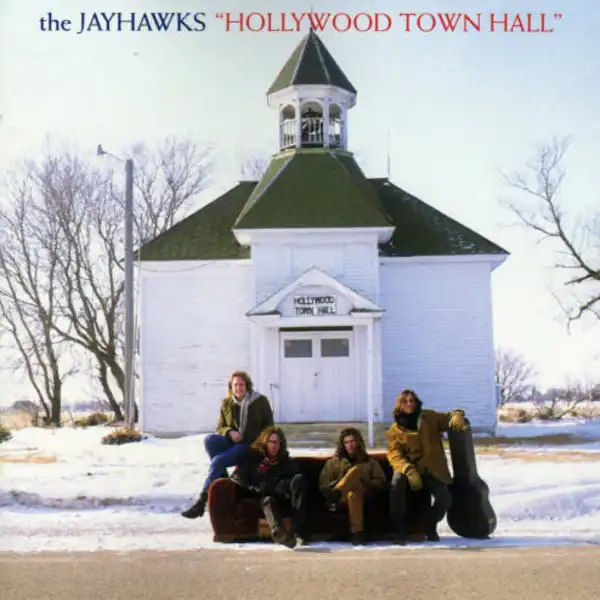
Bill DeVille: Well, it's a Hollywood town hall. You had the picture.
Gary Louris: Yeah, so I don't know. That's how I've always written, pretty much, is I like the sound of things, and a lot of times I find meaning later. So really, there's no exact story to the title.
Bill DeVille: Yeah. One thing I notice about the album, obviously, you know the Jayhawks album in particular, it's a lot different, say than the Smile album, where, you know, the Bob Ezrin production, and this is basically, you unadorned kind of, isn't it?
Gary Louris: It is. It's really the first time I've really sat down with just a guitar in my vocal and wrote something so personal, so intimate. So it started off ... I wasn't sure what I was going to do, is maybe going to get a little combo and find a little studio, and in Canada, where I live, and as I waited to figure out who, where, how, how it would be financed, whatever, I started just playing these songs in my home studio — and I have a nice home studio. It's more than just a home studio. It's a major part of our house. And get up in the morning, and it just started taking shape. And I thought this the way, the meaning of this record, how personal it was, felt like maybe it should just be mostly me telling my story with a guitar.
Bill DeVille: It makes me think of other albums that are put out in that vein, like Bruce Springsteen, Nebraska; Jason Isbell's new album, both just, you know, pretty simple, you know, just a lot of guitar, acoustic guitar, and some good songs. And this is kind of in that mode too.
Gary Louris: Well, yeah, I really haven't done this before. My last solo record had a little bit more, you know, virtual instruments, synthesizers, drum machines. And this just expressed what I was saying in the songs. I didn't need all that. And every time I wanted to add something, I kind of resisted. Like, "I could add more vocals, I could double that vocal, I could put another guitar on," and that kind of snowballs. And the next thing you know, you're putting on bass and drums and it turns into something completely different. So I really had to restrain myself. And I think it paid off. I hope.
Bill DeVille: You did enlist a couple of people. Isn't Stephen McCarthy from The Long Ryders on the record?
Gary Louris: With Stephen McCarthy of the Long Ryders and the Jayhawks.
Bill DeVille: Yeah, that's right, he plays with you guys, too.
Gary Louris: He kind of comes with us, depending on the show, and he's still playing with the Long Ryders, one of my favorite people. In fact—
Bill DeVille: They've made a couple of albums in the last few years, and both of them are quite good.

Gary Louris: Yeah, they're a great band. We played with them way early on, in 1986 maybe, and at First Avenue, I remember. But I didn't know Steve until later, when he ended up joining us for the Rainy Day Music record. And he wrote a song with me called "Better to Walk Than to Run," which is one of my favorite songs on the record, and he played some electric, some baritone and some pedal steel on a couple songs. And then we also enlisted one of our good friends, Eleanor Whitmore — or Eleanor Masterson of The Mastersons, who we—
Bill DeVille: Who played with Steve Earle for a number of years, and now they are back doing their own thing as the Mastersons, aren't they?
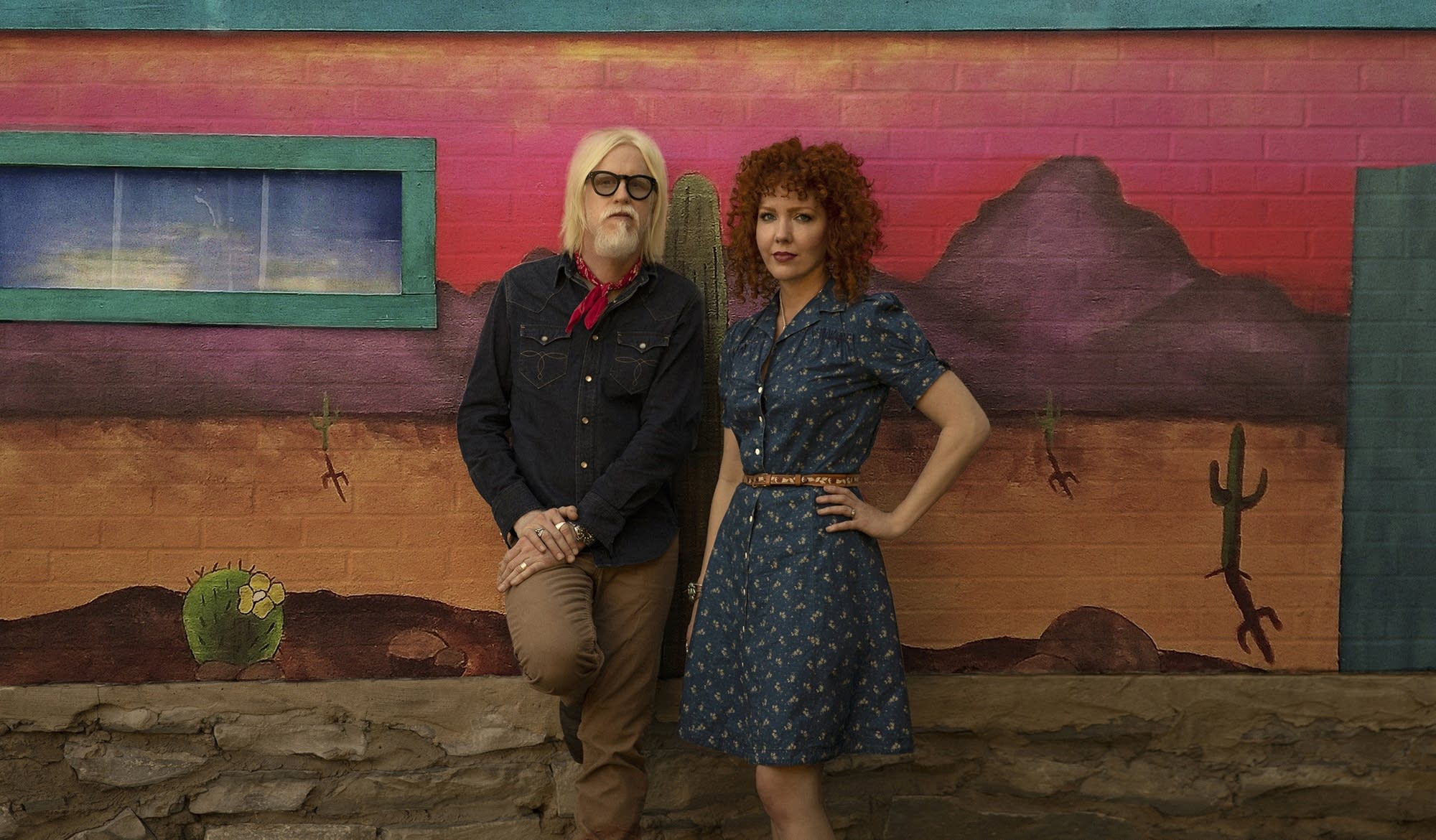
Gary Louris: Exactly. And Chris now plays with the Wallflowers too. So he's the guitar player in the Wallflowers. And so, yeah, Eleanor did some strings, and her husband, Chris, recorded them out in L.A., and that was really it. She did this beautiful arrangement. It's hard to to actually enlist somebody and not be in the same room. It sounds like you're saving time: "OK, I'll send this track out. I don't have to go out there," but because usually there's a lot of back and forth. But Eleanor just nailed it right away.
Bill DeVille: Is that "Perfect Day"? Is that ... ?
Gary Louris: No, it's "By Your Side."
Bill DeVille: "By Your Side," OK.
Gary Louris: "Perfect Day" is a bonus track on — I think it's on the streaming version. And that came about through my publisher; the TV show Better Call Saul, for the final episode, wanted a recreation of the Harry Nilsson song, "Perfect Day," to use in the final episode. And it's an outlier, because it's it does have a lot of virtual instruments; the last song on the stream version, and it has a lot of layers of strings and all ... I meticulously recreated Harry Nilsson's version like a labor of love, and I'm really proud of it. And then they didn't use it.
Bill DeVille: Wow!
Gary Louris: They used somebody else's. And I listened to it the other day. I just didn't have the heart to listen to what they used, and even stopped watching the show. I couldn't watch it, and I was not impressed with what they used, but maybe I'm a little partial. But it ended up on this record, and I thought it's a romantic song, and I didn't want it just to sit there, so it fit in here as a as the last song.
Bill DeVille: So you're a big Harry Nilsson fan, because I remember going to, when they had that, they premiered at Sound Unseen, they premiered the Harry, What's So — I don't remember the name of the documentary. [Editor’s note: The documentary is Who is Harry Nilsson? (And Why Is Everybody Talkin' About Him), directed by John Scheinfeld.]
Gary Louris: I don't either.
Bill DeVille: But you performed with Chan Poling.
Gary Louris: Yeah. A fantastic song written by Badfinger, or Pete Ham, but really, Harry made it his own.

Bill DeVille: Right. So the Jayhawks are coming up on 40 years as a band. How does that feel?
Gary Louris: It's hard to digest. Because you start with just trying to get your first gig, and then you hope some people come, and then you want to go to a slightly bigger place, and then you want to put out your own record, and then we got signed to a local label, and from the local label, we got signed to a major label, and never knowing how long that would last. And then here we are, 40 years later, people still are giving us record deals, and we're still making records, and people are coming out as much as before. And we still have songs. We still have a lot of songs. We are making a record later this year.
Bill DeVille: Yeah, you were mentioning that at your show on last Saturday night, and you mentioned that 2026 is going to be the year—
Gary Louris: The year of the 'Hawks.
Bill DeVille: The year of the 'Hawks. I like it.

Gary Louris: Yeah, 2025 is the year of Gary Louris, we've just decided that that's appropriate.
Bill DeVille: Yeah.
Gary Louris: And so, yeah, there's a lot of things going on in our world. We've got an exciting situation for the recording that I can't really divulge right now.
Bill DeVille: Sure.
Gary Louris: It's under wraps, but it'll be an interesting story, very interesting story. And we have a book that's going to be coming out. I don't think it'll come out in time next year, probably 2027. And we're going to be touring probably more than ever, or more than in the last 15 years, next year, as we want to celebrate this.
Bill DeVille: Yeah. Do you still like being out in the road with the band?
Gary Louris: I do like playing music.
Bill DeVille: Yeah!
Gary Louris: The traveling is never our favorite part. Getting up onstage is always still great. And Steph goes with me everywhere, so I'm not leaving behind. I'm leaving our little puppy behind. That's it. But I think if I can share that with her, it's really fun. And, yeah, we still got something going. I don't know what it is.
Bill DeVille: So one thing I've never asked you is, I know you're from Toledo, so how does one from Toledo, Ohio, end up at the University of Minnesota, and how did you end up, you know, at the U, and going to school and moving to the Twin Cities?
Gary Louris: Well, I was a Catholic school boy. Kindergarten, Catholic kindergarten.
Bill DeVille: I was one of them, too. All 12 years, yeah.
Gary Louris: Well, I did first through eighth, all Catholic, separate boys from the girls, for the grade, then all male, Jesuit coat-and-tie high school in Toledo, Ohio. And then it came to college, or, as they say in Canada, university. And I was accepted, early acceptance, to Notre Dame. And I was all planning on going to Notre Dame, and at one point I just thought, "I don't know if I can do 16 years of Catholic school." And I wanted to be a musician. I didn't know how. I was never in a band in Toledo. I wasn't in a band, really, until after I graduated from college — really backwards, really. And I knew my sister lived here. My sister and brother-in-law had moved here, and they lived here, so I knew somebody. I came out here to visit, and it was summertime, I'm like, "It's really nice here," not quite realizing how cold it was! But you know, and they had a really good architecture program, and even though I wanted to be a musician, I was painfully shy. And I thought, well, I don't know how to get in a band, but I was good at math and drawing, so I decided I would go into architecture. And at the time, the University of Minnesota was in the top three in the country for architecture. So that's why I came here. And it just happened that after I stayed and I worked in the field and in restaurants, as you know.
Bill DeVille: Yeah, we worked in a restaurant.

Gary Louris: Off and on. The music scene happened here, and I met some people. And the next thing you know, I was in the right place at the right time.
Bill DeVille: What was the first band? Was it Safety Last? Was that one of your first bands?
Gary Louris: The very first band was called Schnauzer.
Bill DeVille: Schnauzer!
Gary Louris: Let me say that we purposely — it was a joke. We were like, "Let's find the worst band name." Our T shirts were made with a schnauzer, but like His Master's Voice, the RCA logo, with a schnauzer. And we were a British-rock cover band, all British because I'm really known as an Americana artist—
Bill DeVille: But it's all British Invasion, really, right for you? Is that where it started?
Gary Louris: I'm all British all the time, whether it's Monty Python, Slow Horses, Great British Bake Off, The Crown, the Kinks, The Who, you know, all that. Pretty much my music is really more British based, I think, but then I discovered traditional music while I was in Schnauzer, and that opened me up to bluegrass and soul and blues and country and folk, and that kind of got applied to my blueprint of a little more British pop music. And so I think if you dissect Jayhawks music or Gary Louris music, you'll tend to find three or four more chords than would be typically in a traditional country song or whatever.
Bill DeVille: Yeah, so you've written all these, you know, great songs over the years. Do you have one that you're like, the proudest of that you've written?
Gary Louris: There's a couple. I mean, it depends on the moment. I mean, the songs I really, I think "Sound of Lies" is one of my favorite songs to sing. And it's an emotional song for me to sing, and it just — if I tried to write it again, I couldn't do it. I really enjoy a song I wrote with Jeff Tweedy, called "Listen Joe," which is, it's a funny song, because my wife and I love it so much, and I live to sing it every night, but I don't know. I don't really get much reaction. Don't know what other people think of it. If I announce it onstage, I don't hear people applaud. I don't care. I just love playing that song and singing that song. And from the new record, there's so many; I love the song I played today, "Couldn't Live a Day Without You." I love a song called "Better to Walk Than to Run." I'd have to go through all the material. But those strike me at first.
Bill DeVille: How about one more song I really enjoy that you played is "Listening to Bobby Charles." What was the inspiration behind that song?
Gary Louris: It really was thinking of my mother, you know?
Bill DeVille: Did she like Bobby Charles?
Gary Louris: No, she probably didn't know he was, because she's older, you know? But it's called artistic license. I like Bobby Charles.
Bill DeVille: "Street People" is my favorite.
Gary Louris: Yeah, that's great. And he, from what I understand, he didn't really even play an instrument. He kind of had somebody help him. That is what Marc Perlman told me. Now, I don't know if you can believe what Marc Perlman says, but it's possible. You know what? I just — kids think of their parents as parents, and not always as humans who have dreams and hopes and wishes and feelings of their own. I don't know. I just got to thinking of my mom. She'd sit in her kitchen or stand at the sink looking out the window. We had this little pink Zenith radio, and she'd listen, actually, to Ella Fitzgerald and Frank Sinatra and Andy Williams and Perry Como, and that kind of stuff. But that didn't sing so well. "Bobby Charles" sang much better than "Ella Fitzgerald" as far as the words, not the way they sing. And so it was just a bit of an homage to my mom, who passed away in 2016.
Bill DeVille: Yeah, it's a nice story, and it's a nice way to remember your mother.
Gary Louris: Yeah, well, she was really the only musical factor in our house. My dad pretty much had a tin ear, and my sister loved listening to old music, but she wasn't really a music aficionado. I'm like the outlier as far as the musician in our whole family.
Bill DeVille: Well, you've done pretty well for yourself. I think the Jayhawks have influenced a lot of other bands that have come along, too. I wrote down a few that come to mind. Are you familiar with the Band of Heathens?
Gary Louris: I'm not.
Bill DeVille: Yeah, Texas band, Austin. They have those harmonies.
Gary Louris: I've heard the name, but I'm not familiar with them.
Bill DeVille: Yeah, the Wild Feathers? You worked with them.
Gary Louris: I've worked with the Wild Feathers. Yeah, they're good. They were kind of like these guys from different bands who got together and we wrote some songs together. We have a couple that we wrote together, at least, and the Jayhawks did one of the songs I wrote with them, called — oh, what's it called? — "Backwards Women.”

Bill DeVille: Yeah. That was on that, yeah, that album that came out during the pandemic.
Gary Louris: Back Roads and Abandoned Motels.
Bill DeVille: Yeah, exactly. The Honeydogs locally, you know, back in the 90s, they always reminded me of the Jayhawks a little bit. And, well, Uncle Tupelo.
Gary Louris: Uncle Tupelo, right.
Bill DeVille: I still remember a time when, Seventh Street Entry, you came up and did a bunch of Gram Parsons, Flying Burrito Brothers songs with the Uncle Tupelo guys in Seventh Street Entry. Do you remember that?
Gary Louris: No, but you know what … ?
Bill DeVille: Probably about '89, '90 something like that.
Gary Louris: I remember getting up with them, like, at Cicero's in St Louis, and I remember when Jeff first came with Uncle Tupelo to the Uptown Bar, because they used to kind of follow us, and we didn't know who they were at the time, we were kind of a couple steps up the ladder, as far as label wise, and they'd come see us play and want to hang out a bit. And I didn't really know them too much. I didn't really. But then one day he came into town, and Jeff called me, "My band's playing up at the Uptown," I went to see them, and I was like, "Oh, I get it." So then I got to play on one of their records and became lifelong friends.

Bill DeVille: Yeah. So what's it like being an American living in Canada these days?
Gary Louris: Oh boy! As my wife would say, "Oh boy!" You know what? I could go on for hours. It's really, uh, interesting to watch from up there. Because I don't recognize this country right now. It's doesn't feel like my country anymore. I am embarrassed and ashamed, and it's maddening. I don't understand why — it's a sovereign country. It's, I don't know why everybody isn't just running out on the streets and demanding justice, but it's sad, it's maddening, it's scary, but people there, when they find out I'm an American in Canada, they always treat me well, and they say, "We know it's not you. We just don't understand why." And I have to say, I am so grateful I met my wife, Steph, because the love of my life, but also, I got to, she brought me up to Canada, and it's just, it's just a superior country, I'm sorry. There's not so much left and right. So like, I was watching something today about some tragedy in Brooklyn Park, and they showed the mayor's name and it had a "D" next to it, which I assume was saying he's a Democrat. And I'm like, "Why do they have to keep delineating between ... ?" So anyway, we're riding this out, and we, I'm just really sad for the country and scared. And I just have to say, I feel like a Canadian now.
Bill DeVille: Fair enough. We try to be hopeful here in the U S of A.
Gary Louris: Yeah, I know people don't want to talk about all the time, because they're living here, and they're just hoping they can stick their head in this sand and it'll go away, but we'll just ride it out, hopefully only for — not for three terms.
Bill DeVille: So nice chatting with you, Gary Louris.
Gary Louris: Thank you, Bill.
Bill DeVille: The new album is called Dark Country. Pick it up. It's a good one, and it's always a pleasure to see you, sir.
Gary Louris: Great to see you. Bill.
Bill DeVille: Mm-hmm.

Songs Performed
00:00:00 Couldn't Live A Day Without You
00:02:27 Listening to Bobby Charles
00:05:24 White Squirrel
Tracks 1 and 2 from Gary Louris' 2025 album Dark Country; song 3 is from Louris' 2021 solo release, Jump For Joy.
Musician
Gary Louris – vocals, guitar
Credits
Guest – Gary Louris
Host – Bill DeVille
Producer – Derrick Stevens
Audio – Cameron Wiley
Video – Ruben Schneiderman, Alex Simpson
Graphics – Natalia Toledo
Digital Producer – Luke Taylor
External Link
Gary Louris – official site