Jonathan Bernstein, writer of the authorized biography of Justin Townes Earle, shares thoughts on the late singer-songwriter
by Bill DeVille
January 11, 2026

Jonathan Bernstein is the senior research editor at Rolling Stone magazine, and he has a new book about the life of the late singer-songwriter, Justin Townes Earle. The book, titled What Do You Do When You're Lonesome: The Authorized Biography of Justin Townes Earle, releases Tuesday, Jan. 13.
Ahead of the book’s release, Bernstein spoke with The Current’s Bill DeVille, host of United States of Americana. Bernstein described the process of writing an authorized biography and what that means, and he also reveals how he became a fan of Justin Townes Earle after seeing Earle perform at the Turf Club in St. Paul back in 2009. Use the audio player above to listen to the full interview, and find a transcript below.

Interview Transcript
Bill DeVille: Hey, I'm Bill DeVille. This is United States of Americana. I'm here with Jonathan Bernstein. He's the senior research editor at Rolling Stone magazine, and Jonathan has a new book called, What Do You Do When You're Lonesome: The Authorized Biography of Justin Townes Earle. Nice to have you here, Jonathan.
Jonathan Bernstein: Bill, thanks so much for having me.
Bill DeVille: So let's start out with this: It's an authorized biography. What does that mean? And how did you make that happen with Justin Townes' family?
Jonathan Bernstein: Yeah, one thing that I've learned during this process is that even biographers have different meanings of what "authorized" means. So this is all kind of new ground for me, but basically, in this case, what "authorized" meant is that Justin Townes Earle's estate, which is basically his widow, Jenn Marie Earle, fully cooperated with this book and was totally on board with me writing it. And Jenn Marie and I first kind of started talking and first formed a relationship when I wrote an article for Rolling Stone about Justin shortly after his death. She gave interviews for the first time, and really opened up and seemed to me really committed to telling an honest story, to telling Justin's story and all its beauty and all its darkness, and we kind of got along well. There was a lot of mutual trust. And this book process really started with me, honestly, writing a letter to Jenn Marie very early on and seeing if she would be open to a book-length sort of exploration of her late husband's life.

Bill DeVille: So what led you to Justin Townes Earle's music? You're a fan, right, as well?
Jonathan Bernstein: I'm a huge fan, and this interview in particular is fun for me, because my relationship with Justin's music started at the Turf Club. In April 2009, I was going to college at Macalester at the time. I was working for the college radio station, and Justin was opening for Jason Isbell and the 400 Unit.
Bill DeVille: I was at that show as well.
Jonathan Bernstein: It was one of those kind of "Big Bang," life-changing shows for me. I was 20 years old at that point. I was mostly going to sort of shows, big shows of classic-rock acts that my dad had kind of gotten me into, you know, to see Springsteen at the Xcel Center, or, you know, Jackson Browne at the Orpheum. And this show, I just had never seen anything like it. There were probably — I don't know if you remember, Bill — but maybe 100 people there?
Bill DeVille: Yeah.
Jonathan Bernstein: I was five feet from the stage, and this guy, Justin, comes out. He was performing with Cory Younts at the time, and his record Midnight at the Movies had just come out. And at that time, and this is in the spring of 2009, Justin was performing this sort of like almost medicine-show salesman, Grand Ole Opry, like, he seemed like a character out of a very ancient past for me as a 19-, 20-year-old college kid, and I was just blown away by his his showmanship and by his songwriting.

And that kind of started my lifelong fandom of Justin's music. He introduced me, I think, to a lot of musicians, kind of that were closer to my age, that were younger, that were our generation, making this kind of traditionally inspired roots music, and I followed Justin's career once I started writing about music professionally. I interviewed Justin once, I reviewed a few of his records, and I would just see him whenever I could in town. I was a huge fan of his.
Bill DeVille: What was your interview with him like? I mean, I was lucky enough to interview him twice, and he's an open book, is what he is, and he'll tell you anything.
Jonathan Bernstein: Yeah. He was a total open book. I interviewed Justin for American Songwriter magazine right when his Single Mothers album was coming out, sort of in the mid 2010s. So it was a sort of transitional period in his career. It was a short interview, to be perfectly honest, but he was incredibly charming. He did the thing that I think he did with every interviewer, 10 times a day, which is he charmed the living pants off of me, and he was very open, funny and insightful. I think there was so much more to Justin, as open a book as he was, and as forthcoming about his life as he was, you know, there were also sides of himself, and I think, sort of more vulnerable private sides of himself that he kind of did tend to shy away from talking about, and I think for him in a lot of ways, you know, kind of, I think one thing that I came to learn through, again, speaking to so many people who knew him intimately, is that his kind of open-bookness was very true to him. It was also, I think, a very controlled, sort of almost showbiz understanding of, like, controlling your own narrative and writing your own story out in life. I think he was an expert at that.
Bill DeVille: Yeah. The book touches a lot on his, well, complicated relationship with his famous father, Steve Earle. Did you get the impression that they were actually close?
Jonathan Bernstein: Yeah. So Justin's dad, of course, is the famous, you know, country-folk legend, Steve Earle. I would say, in general, one of the main things that I came away from, again, talking to people who knew both Justin and Steve and who had witnessed and observed Justin and Steve together in private, you know, away from the public eye, as much as Justin loved to bark about how much his dad screwed him up and how absent he was, Justin and Steve were fiercely and profoundly close in many ways, and had this really intense, unique and at times, sort of tormented bond and closeness. And you know, one of my favorite stories that one of Justin's friends told me is, you know, people would describe being in the room while Justin was on the phone giving an interview to a journalist, and he would, you know, be sort of slagging off on his dad, and, you know, talking trash about his dad. Then he'd hang up the phone with the journalist, and then call his dad and say hi. So their relationship was so complex.

Bill DeVille: I remember asking him, he was in Treme, as was Steve, and I asked him, "So what was it like watching your father get gunned down?" And he said, "You know, I wasn't really too bothered by it." That was his response to me.
Jonathan Bernstein: Fascinating. You know, I became very fascinated with the way both of them sort of played out their kind of almost psycho drama, father-son relationship in public. And I think they did it in lots of indirect ways. I mean, even re-watching some scenes from The Wire. There are lines — and I know Steve didn't write his own lines, necessarily, for The Wire — but there are lines when he's talking about people that he's sponsoring in recovery, and he's talking, you know, in character, of course, as Waylon in the show, and it sounds like he's talking about Justin.
Bill DeVille: Yeah. I also got the impression that Steve may have been a little bit jealous that Justin Townes beat him to the punch on his song, "They Killed John Henry."
Jonathan Bernstein: The father-and-son relationship, I think, also involved a ton of competitiveness on both ends.
Bill DeVille: Oh, yeah.
Jonathan Bernstein: I think they both envied each other's skills in certain ways. I think Justin, frankly, idolized his father's songwriting, and I think aspired to be the type of songwriter that his dad was. And, yeah, I mean, Steve has talked about himself. Steve, I think, was really jealous of Justin's guitar playing. And, yeah, beat him to the punch on a John Henry song.
Bill DeVille: Yeah. The guitar playing, that is, it was really something. I mean, Steve said it was, "You're not going to be able to do this." But he proved him wrong, Justin Townes did, and he was able to do it. He plays like an old bluesman would play, you know? There's so much going on. I could sit and watch that guy play guitar all day long. He was just an amazing guitar player.
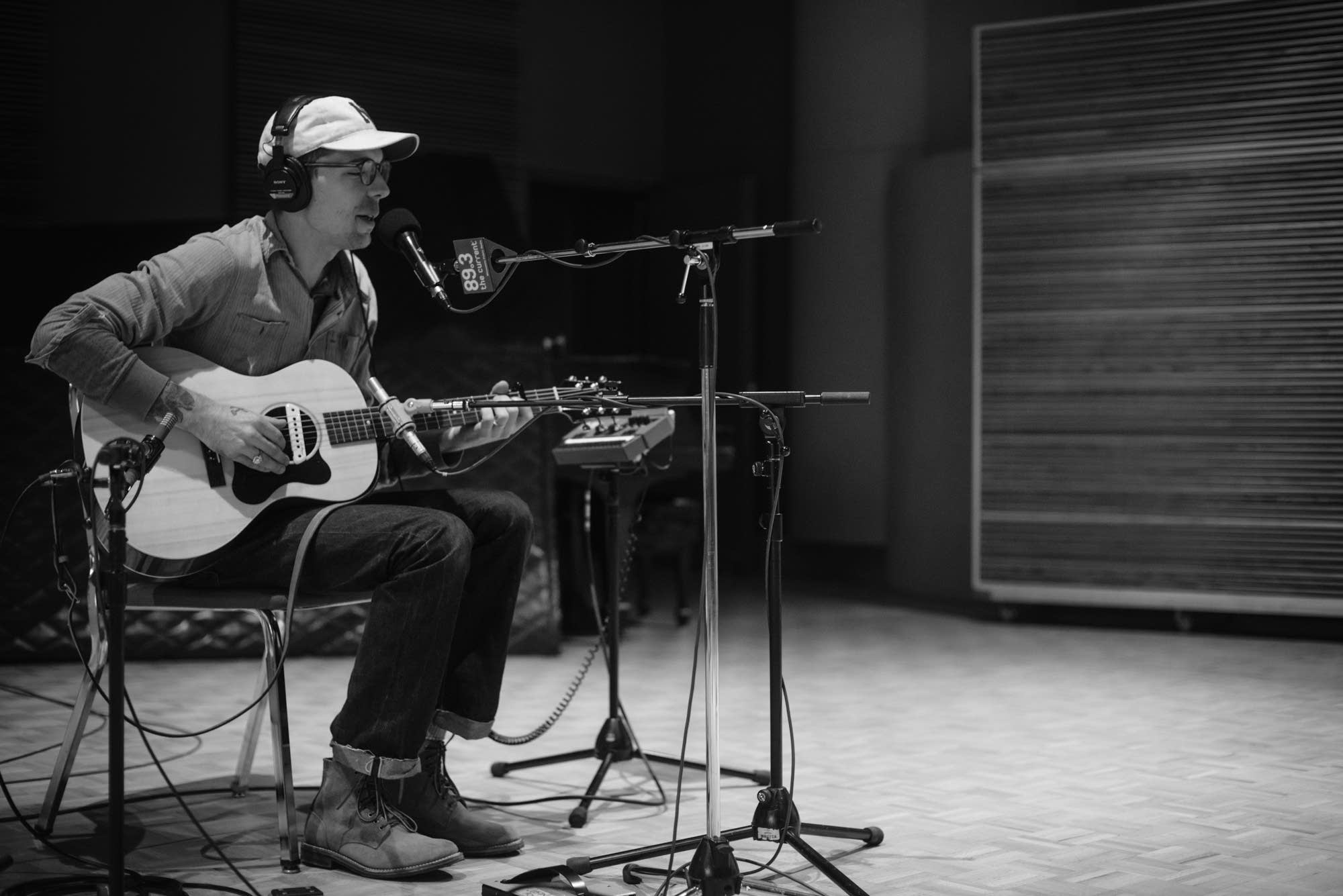
Jonathan Bernstein: You know, one thing that repeatedly came up that had never occurred to me as a fan who went to see Justin play live, even though I don't know that much about guitar playing.
Bill DeVille: Nor do I, yeah.
Jonathan Bernstein: All the time, people would go to see Justin's shows, and they would ask him after the show, or they would ask his manager or his merch guy, like, "Who did you have off stage, like, secretly playing additional guitar parts?" Or, "How did you that guitar looping?" Because the sound that he produced, it felt at times, like three different musicians playing. His guitar style was so deeply influenced by so many people, from Malcolm Holcombe to Mance Lipscomb to Lightnin’ Hopkins. But what he did with it, you know, he did that American folk-music thing: He took, you know, 5, 6, 7, different influences, and made a sound entirely his own.
Bill DeVille: Yeah. He always had so much extra pressure on him, you know, being the son of Steve Earle and being named after the legendary Townes Van Zandt. And he was still able to create his own thing. How do you explain that?
Jonathan Bernstein: This relationship that Justin had between the pressures of his inheritors and sort of forging his new path, I think, was really one of the kind of great central conflicts, artistic conflicts, in his life. I think Justin, for many reasons, needed to promote this idea that he was his own man who was not at all shaped by people like Townes Van Zandt or Steve Earle, or, you know, any of their heroes. But it's quite clear that, you know, Justin idolized that stuff, and he grew up thinking that, in his own words, Justin grew up thinking that he needed to be like that. And I think with adulthood and maturity in his own life and with sobriety, he really found ways to articulate his own artistic self and his own identity. But I think it was, again, a truly challenging and somewhat tortured sort of process for him throughout his life.

Bill DeVille: It's Bill DeVille. I'm here with author Jonathan Bernstein. We're talking about Justin Townes Earle and the new book all about him, What Do You Do When You're Lonesome: The Authorized Biography of Justin Townes Earle. You know, the saddest part about reading the book was the last several chapters. It just seemed like he was out on the road, and he really shouldn't have been at all. And it just seems so tragic, and reading about how they had to, you know, prop him up to get him onstage, that seems so tragic to me. Any thoughts on that?
Jonathan Bernstein: Yeah, I mean, there are so many layers of tragedy to Justin's story, which ends, of course, with him dying by himself in an apartment at age 38 of a fentanyl overdose, and frankly, not being discovered for several days after. It's about as excruciating and pitch black of an ending for such a beautiful person and beautiful artistic talent as one can imagine. And yeah, I mean, there's a lot of complex grief in Justin's community about what happened to him over the past few years. There's a lot of pointing of fingers, and there's a lot of people who blame other people for this, but the reality is that, you know, there were so many conditions that Justin was sort of a victim of in his last few years; one of many of them being that he was a working independent musician in the age of streaming, and in the age where we're all told that the only way to make money is to stay on the road, and Justin had a new family. He had a wife, he had a baby daughter, and he felt an enormous amount of pressure to provide for them. And he felt an enormous amount of pressure to, you know, keep people that he cared about employed, and those people felt an enormous amount of pressure to do right by their client. And what that meant was, for the last few years of Justin's life, was a subject of intense, loaded, painful disagreement.
Bill DeVille: Yeah, and, you know, I recall the last time I saw him was in, I believe it was the autumn of 2019, and I'm a super fan; I love his music, and I love his onstage thing and all that. Me and my wife left early because it was a train wreck. I mean, the back-and-forth with the audience was uncomfortable, and he ended up shirtless before the night was up. And it was just awkward. You know? It was awkward.
Jonathan Bernstein: Yeah, the last full U.S. tour of Justin's career was the fall of 2019, Saint of Lost Causes tour, which was, to be quite honest, excruciating to learn about and excruciating to write about. I felt a real need to be quite honest about the reality of that tour, the reality of Justin's state at that point. He was waking up less than an hour before he took the stage, because if he woke up any earlier than that, he would be way too drunk to perform. He was barely functioning on a day-to-day level, and was wildly out of touch with reality. And the people that I talked to, Justin's tour manager, the person who sold merch, and just about every musician who played with him on that tour, and it was just an absolutely devastating, sort of wrenching experience to try to find ways to support their friend who's just in the throes of absolute, overtaken, despairing addiction at that point.

Bill DeVille: Yeah. So you wrote this book called, What Do You Do When You're Lonesome: The Authorized Biography of Justin Townes Earle. Was it hard for you to write this book?
Jonathan Bernstein: It was very hard. This is my first book. And it's, of course, apart from just writing any book, which seems like a hard thing to do, his life was so unbelievably vivid and profound and wild and in ways hard to believe, and trying to capture that, you know, responsibly, honestly, ethically, was a huge challenge. He is someone who I care so much about, just on a personal, emotional, human level, and as a fan and as a critic, and I really wanted to try to tell a story that did right by his legacy, and that didn't romanticize some of the dark elements of the sort of unbelievably rock-and-roll, so almost cliched life that he lived, and it was a big challenge to try to tell that story fairly, but in a way that ... A lot of people are actively grieving Justin right now still, because he only died five and some years later. So it was definitely a challenge, but I hope that I did right by him.
Bill DeVille: Yeah. He's one of those artists, you know, when some people die, you immediately want to listen to their music, and it I couldn't listen for a long time. I had to just put the records away. And finally, I'm able to dig them out then again, and I went back through the collection, and there's some gems in his, you know, 10-plus year recording career.
Jonathan Bernstein: That's something that a lot of people said to me, you know, a lot of people who knew Justin as friends or bandmates. Justin had such a profound effect on just about every single person he ever crossed paths with. Writing this book and doing the interviews for this book was something like being a therapist or grief counselor for his community. I mean, at one point, you know, someone who knew him quite well, literally through tears, said to me, "Can you please bring him back to me?" That was the level of emotion in a lot of these conversations. And I hope that in telling his story honestly and fairly, I hope that people feel closer to him, who knew him and who never knew him.

Bill DeVille: Do you have any favorite songs of his?
Jonathan Bernstein: I do. My favorite song of Justin's is the one that hooked me from the day one at the Turf Club in 2009, it's "Mama's Eyes." That was kind of my introduction into Justin, it was my portal into the way that he could sing about something so profoundly and so personally in two-and-a-half minutes and just tell this story that was both heartbreaking but also just full of so much beauty. And that is always going to be my favorite Justin song.
But writing this book, I will have to say, gave me such a deep appreciation for his catalog in a way that I, frankly, even as a big fan, never had before. What I really, I feel like, took away, is that Justin was able to really packed so much emotion into these songs, if he kind of cloaked them in different ways, with, you know, different genres or styles. He found so many inventive — frankly, brilliant ways to sing about himself in disguise.
Bill DeVille: Yeah. And we can't not talk about "Harlem River Blues," the song of the year on the Americana Awards and Honors back in 2010. Now, that's an amazing song, too.
Jonathan Bernstein: "Harlem River Blues" is a song that I've always loved, of course, and it's a song that, you know, I've found myself singing to myself just walking down the street for the past two years. It's a song also, just to talk a little bit about Justin's legacy, that it's been so beautiful to watch it have a second life since his death. I mean, right when I started writing this book, I went to go see Charley Crockett perform for the first time in New York City, and halfway through the show, he just busted out a cover of "Harlem River Blues." And it's truly a song that I think speaks to the true genius of his songwriting. And I think it's a song that you know bluegrass bands 50 years from now are going to be covering, I think I saw both David Byrne and Emmy Lou Harris harmonizing with Steve Earle onstage on "Harlem River Blues" while writing this book. I mean, the life that that song has taken again, I think is just a testament to to the true, profound skill and beauty that Justin accessed as a songwriter.
Bill DeVille: Thank you for writing the book. I appreciate it. I mean, I got a lot out of it, and I can't wait for others to read it, too.
Jonathan Bernstein: Thanks so much, Bill. Thank you for having me. I hope Justin fans find a lot in the book to connect to.
Bill DeVille: It's Jonathan Bernstein, who is senior research editor at Rolling Stone magazine and writer of the new book, What Do You Do When You're Lonesome: The Authorized Biography of Justin Townes Earle. It's been a pleasure chatting with you.
Jonathan Bernstein: Such a pleasure, Bill. Thanks again for having me on The Current.
Bill DeVille: My pleasure.
Credits
Guest – Jonathan Bernstein
Host/Producer – Bill DeVille
Additional Production – Derrick Stevens
Digital Producer – Luke Taylor
External Links
Jonathan Bernstein – official site
What Do You Do When You’re Lonesome: The Authorized Biography of Justin Townes Earle – Da Capo Press
Justin Townes Earle – official site