Interview: Humbird explores inner anger on third album, 'Right On'
by Diane
August 08, 2024
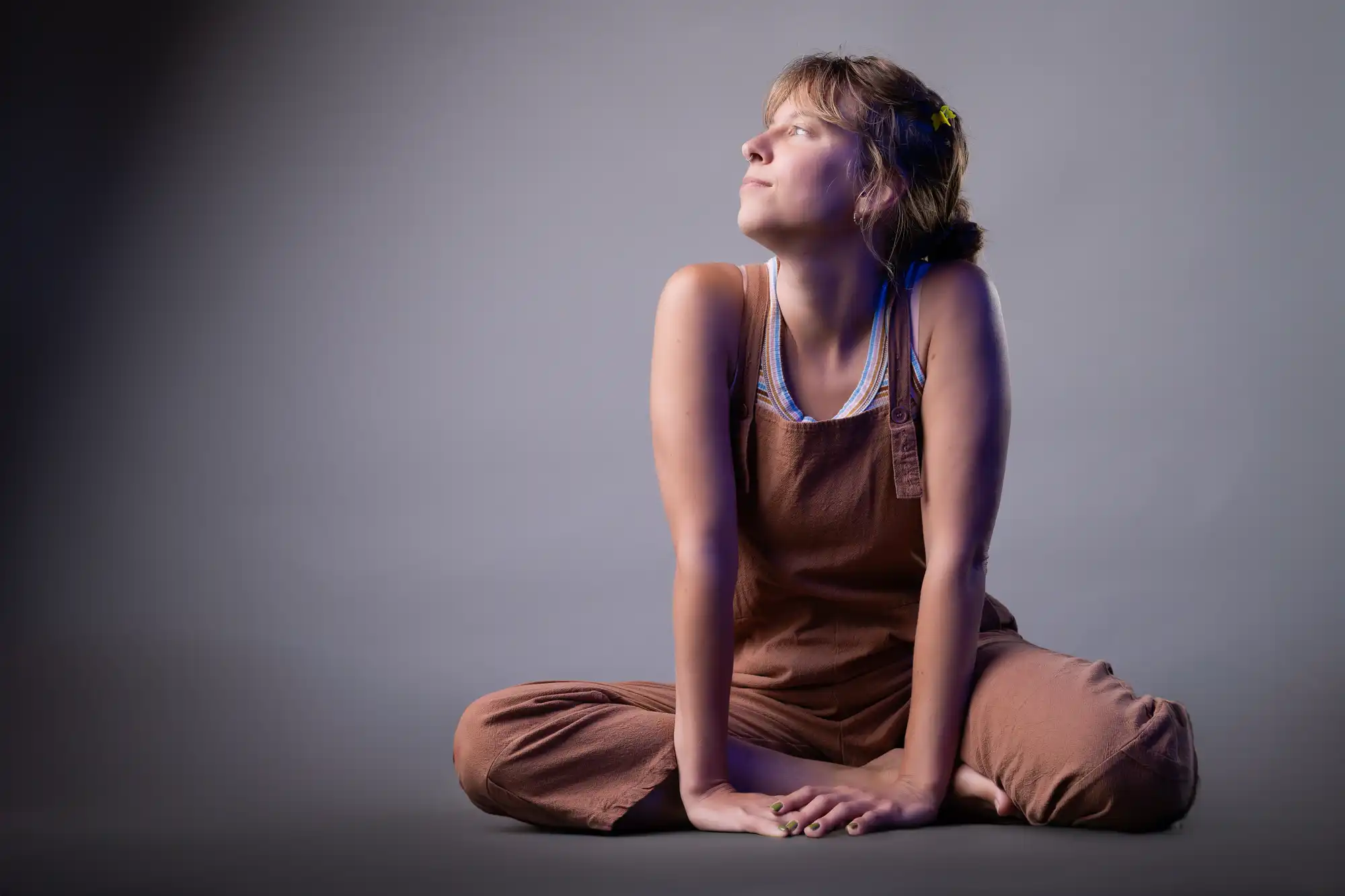
Singer, songwriter, and guitarist Siri Undlin of Humbird is an exceptional transmitter of human emotion. Humbird’s new record, Right On, explores anger through frank lyricism and heavy sonic textures. While grittier than previous records, Right On stays true to the warm and heartfelt folk aesthetic she is known for.
Host Diane talked with Humbird, The Local Show’s Artist of the Month for August, about her career as a musician — one that began with a strong affinity for music and songwriting at an early age. A deep thinker and feeler, Undlin shares details of her background as a daughter of a preacher, college student and athlete, Watson Fellow, and more. We also discussed the making of Pharmakon, the LP that put Humbird on the map, which has now having amassed more than 28 million streams on Spotify.
Catch Humbird as the opening act for The Cactus Blossoms’ album release show at Fitzgerald Theater on Friday, Sept. 13. Later in September, Humbird will perform at Ryman Auditorium in Nashville as part of the Americana Music Association’s annual star-studded Americanafest.


Diane: Talk to me about Right On, your new record.
Siri Undlin: I was tapping into anger for the first time with songwriting. I obviously have felt anger plenty of times in my life, but that wasn't always the time I picked up my guitar. Usually my guitar and writing relationship was a lot more centered around sadness or introspection. This writing process was different because I was bored with all that. And I was feeling really angry in the world. And I was like, "Well, where does music go when this is what I'm feeling?" So that was a really strong engine behind the writing process, and also a really good reason to turn up the distortion pedals and just the overall volume. It's not like we did anything so different than what Humbird has been in the past. There's still tons of introspection and gentleness, but there is a more gritting-your-teeth quality to it. And in some ways, it's part of an ongoing creative conversation with myself and the community I'm part of.
The previous Humbird record is called Still Life, and it was all written in the house I was living and quarantining in. That was basically on Bloomington and Lake [in Minneapolis]. So it's just a really dense part of the city, and a very intense place to be during the uprisings and during the events of 2020. And weirdly, that album is really quiet and calm. And I think it was just this way of navigating that intense time. Music could be a safe place to go to. And there's a lot of songs in the album that are dedicated to my neighbors and just wanting to use music as a way to make things a little better and calmer and safe-feeling. Music can feel like a room you can go to and you'll be okay for a second. And that was an amazing project to sink into and explore.
But, of course, within a year or two, anger was what I could not see past. So it was an interesting sequel, actually. All the songs were written within this two-year period. So they feel very connected to me, even though sonically and the way they're presented online is very different. Right On is looking outward, and it's commenting on what I'm seeing from a place of humility. Because I'm not an expert. I don't know what I'm talking about 99% of the time. But I think that's true of most of us. Our reactions are still valid to the things we see that are totally not okay and unfair. Music is a space where you can be unsure, but also confident in what you're witnessing.
I don't know what I'm talking about 99% of the time. … Music is a space where you can be unsure but also confident in what you're witnessing.
I have been on a bit of a Celine Dion kick for whatever reason ... I think a common thread among powerful singers is there's a compelling aspect to their voice that makes you listen and take their words seriously. She said something along the lines of, “I was just following my voice and what my voice was calling me to do.” There's an undeniable quality. And you being a singer and songwriter, making a career out of it, and also being a really good lyricist — it seems you're following what your emotions are saying to you and then expressing them through song.
What you just said made me think of something, too. You're talking about following the voice. And I think you can follow songs as well. I think of songs as living things that you participate in sometimes. And maybe you're lucky enough to write down that song. Maybe you're lucky enough to perform that song. But they feel like things that breathe and float around. Something that's really compelling is when you're honoring the fact that a song is an idea that's bouncing around and an amalgamation of a lot of people's thoughts and impressions. But you just happen to have a pen and a paper and a knack for catching it.
Yeah! And delivering it.
It's an empowering way to look at messaging behind music that doesn't necessarily feel like you're preaching. You're just reflecting back towards your friends, family, or community, what you're all steeping in at any given time. I think it's really magical. It's one of my favorite parts about performing and writing.
You mentioned the word humility. Growing up in the North, there's something very Minnesotan about the word humility. There's a certain kindness that a lot of Minnesotans portray. And you [grew up with] a mother who was a preacher and spoke through the word of a higher power. And you received healthy messages about love and creativity through the inspiration of your mom. Tell me a little bit more about that.
The more I perform and tour, the more I'm like, “This is not that different than what my mom did.” She's retired now, but I was really lucky to grow up in a family and within a tradition that was about love, asking questions, and showing up for people. I know that's not the case for everyone. As an adult, I've come to appreciate it even more because I have a better understanding of how rare it is. Either way, my mom and other members of my family, who are really active within the church, were so dedicated to looking at the world through a divine lens of what is sacred about this world. And how do we talk about it? How do we celebrate it? If there was a Venn diagram, music is right there too. Where do we see beauty? Where do we see instructions for how to live our lives? And how do we gather and support each other at these really special moments, whether it's concerts, church, or around the campfire. Those are really important things to participate in, depending on where you're at and where your values are. But you're sitting next to somebody and lifting up your voice, whatever that means. I think that stuff is part of our human inheritance.
I want to bring it back to Right On. You're exploring anger ... It's a human thing. It doesn't have to be seen in this negative light. And you're exploring anger through different channels of grit in this record. Expound on that a little bit more — what that process felt like for you.
Anger is an emotion that I'm still very much learning from and learning how to appreciate because it isn't always easy or comfortable. With music, when you can plug your guitar into a distortion pedal and crank your amp all the way up. That, to me, feels like a healthy way to commune with anger and be like, alright, where are you pointing? What areas of my life am I not being honest in? Where am I witnessing injustice and horrors in the world, and how am I going to react to that, or show up in my life for the things that I think could be better?” Music is such a fertile place to sit with that. You don't have to have any answers, which is a relief. You can just be like, “I’m angry. Here's a power chord and some words that are mostly questions.” … It's a little bit more sustainable to move through the world and be propelled by that anger in a way that's productive, as opposed to totally numbing and destabilizing.
With music, when you can plug your guitar into a distortion pedal and crank your amp all the way up. That, to me, feels like a healthy way to commune with anger and be like, “All right, where are you pointing? What areas of my life am I not being honest in? Where am I witnessing injustice and horrors in the world, and how am I going to react to that, or show up in my life for the things that I think could be better?” Music is such a fertile place to sit with that.
You went to Colorado College, and you were in hockey … You're an athlete and a singer.
I feel like I'm actually a jock parading as a musician, honestly.
That's how I feel! No wonder!
Maybe that's why we've always gotten along really well.
That's why we got a connection.
Hockey, soccer, and rugby were three very important things for me growing up. And I did play pretty competitively. Ice hockey was what I was really passionate about. I quit for a couple years because I went to Perpich Center for the Arts here in Minnesota, and they didn't have a hockey team. But then I did join my college hockey team. So I played for another four years.
And you studied creative writing and cultural anthropology. That also totally serves your writing. I feel a lot of that in your messaging, this poetry. Tell me more about how your college experience studying those things informs how you write music, too.
It's funny, because looking back it all feels so connected in retrospect. But at the time, I was like, “I don't think music can be a job.” Or I just wasn't really around people who were making music for a living that was the type of music I made. So it was sort of a case of, if you don't see it, you don't even really know to dream it. But at college, I was like, “I love studying people. I love writing.” So it was exploring how to become the best writer I could possibly be, and also deepening my understanding of evolution, archeology, folklore, and just getting this big overview of "What in the heck are we all doing here? And how is this happening?" Just those big existential questions and hanging out bones and stuff. It was really awesome. But towards the end of that experience, I was awarded a fellowship to study folklore and fairy tales for a year. It was an extension of my thesis.
The Watson Fellowship.
Yeah, it was this totally insane opportunity. The rules are you have to travel alone the whole time, and you can't come home. You just go off for a year to answer your question. It's kind of like the Fulbright. It's smaller, so less people know about it. But it was that research that totally blew up my mind and what I thought I was going to do with my life. I was shadowing storytellers and musicians who were on mini-tours. And I was like, "Oh! I don't want to be in the classroom pulling these things apart. I want to be out in the world, in the pubs, in the backyards, in the community centers where the music and the stories are happening. I want to be part of putting them together and cultivating experiences for people. Not dissecting it in the classroom." There's an important role there as well. But that research, I was like, "Oh, actually, I'm gonna go home and get in a van with my friends and see where we can go with music."
And then when did guitar playing come into all this? One of the things I appreciate about Humbird is the musicianship. There's soul to it, but there's also a technical aspect to it that, as a musician, you can't help but appreciate.
Aw, thanks. I started playing guitar pretty young. My aunt Joan taught me three chords when I was 11 or 12. And I really rocked those three chords for a long time.
Three chords can get you far!
That's all you really need. And a capo? You don't really need much else. But I think I wrote 30 songs that were all D, G, and A in middle school. Maybe an E-minor in there. I was really into it, and it was this thing I did when I wasn't playing sports. Some of my first memories of showing people songs and being so terrified but excited were my hockey teammates. They were really nice.
Aw! A lot of athletes don't get it.
I think they fully didn't get it. But they were like, "Oh, Siri really seems excited about this. Just let her play the song at this sleepover or whatever."
[Laughs]
I can relate so much.
But actually, I did start singing with teammates ... there's always categories when you're growing up, of the jocks, the musicians, the theater kids, whatever it is. But actually, kids aren't like that. They're so into various things. So there were people on my hockey team who loved singing. And we would work up songs and play music together at hockey team sleepovers.
And you would lead singalongs with your guitar.
Yeah! Or other people did too. It was just a really funny thing. I don't know if it's normal or not. What even is normal? But that's kind of how it went down for me.
I was in track and field and cross country, and I did it in college as well. And I was a really shy person, so people would love it if I just started playing music … My teammates all liked music, and they would talk about it. But I seem to like music on a much, much more obsessive level than everyone else.
That deeply resonates.
I want to bring it back to Pharmakon, because it's such an important song and an important record in your career as Humbird. The single has garnered more than 26 million streams [on Spotify] at this point. You've done some fun reworking and reframing with it. Tell me about some of your reflections on that album that was released five years ago.
I think that album is such a good argument for going for it. Humbird has grown over the last five years, and we're working with a label now. There's various team members that have come and gone. And fellow musician friends often ask “What was the secret? Or what was the golden ticket?” And it's so sad that there isn't one to just tell people, but that record was fully independent in every way. I didn't know what I was doing. I was learning everything the hard way, and cried a lot, and went into debt to put it out. ... It was not easy or glamorous. I did it with friends and family supporting me every step of the way, and mentors saying that's a bad idea or that's a good idea.
It was very much coming from a DIY place and mentality, and very much rooted in this scene here in Minnesota. And then put it online, and some crazy things have happened that have made more things possible. But ultimately, it was just like, “Let's just go for it. I'm just gonna do it and see what happens. I believe in this.” ... I think that's maybe a frustrating answer for people to hear. But I look back on that first album and it's like, “Dang, I just kind of went for it and wasn't going to back down in the sense of – ‘No, we're gonna tour. And we might play for three weeks to zero people, but we're going. And I might have to spend all of my tip money from this restaurant that I'm working at for the whole year towards it, but I guess that's just what I'm gonna do.’” And I feel like there's a lot of privilege in that statement because not everyone has the ability to do that.
I was at a place in life where it was possible and there wasn't really any secret sauce. It was just like, "I'm gonna make the best music I possibly can at this point in my life, and I'm going to go play shows. And it might be to the sound guy and the bartender, but we're gonna put on a really good show the best we can." Funny to have it have so many plays at this point, because that's certainly not what it seemed like what's gonna happen on the onset.
Isn't that something? Nothing's ever predictable in that way. But ambition and hard work — those are two very important elements of getting your music out there.
Totally! And not waiting for someone to tap you on the shoulder to tell you, "Go ahead now. It's your turn. You're good enough. Go for it." You actually just have to decide that you're committed to it. And that commitment will look different for everyone. But no one's gonna pat you on the back and say, "Good job, Champ! You're ready for the next level." You have to build it, and build the staircase to the next level. That's all it is. And honestly, I still feel like I'm doing that every day. How do I build this staircase to wherever I want to go next?


Humbird, Siri, thanks so much for coming in.
Thanks so much for having me, Diane. And I want to say thank you to you. I love The Local Show. I always have. You're such a good host. Oh, I love the music you play. I think you do a great job. And I actually run into you out in the world at local shows. You're out there, and I think it's really special.
Dang. Thank you for seeing me and pointing that out.