Interview: Papa Mbye shares influences behind his new album, 'PARCELLES 16'
by Diane
October 07, 2024
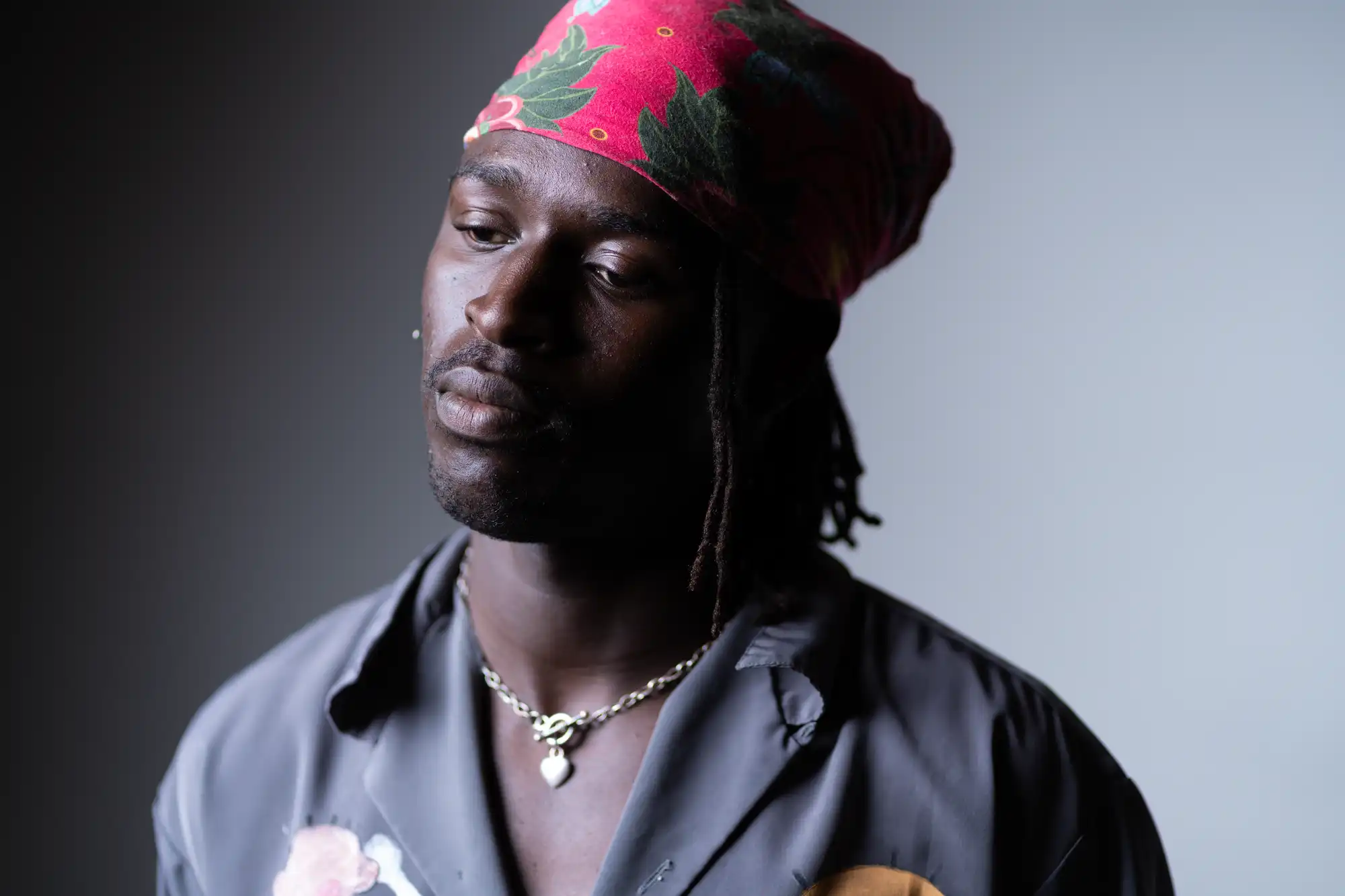
The future of Minnesota music is alive and well, especially among vibrant, young talents like Papa Mbye. Blending innovative and satisfying electronic production with tender singing and introspective lyrics, The Local Show’s October Artist of the Month is among an inspiring crop of like-minded artists prolifically producing, arranging, and performing exciting new music.
Papa Mbye's second EP, PARCELLES 16, emerged from a trip to Senegal and The Gambia — the latter being his birthplace. While attending a family member's funeral, he felt a profound layer of grief that many immigrants share — a deep sadness for roads not traveled and paths not taken. Mbye spoke with The Current about the experience and how it profoundly influenced the direction of the lyrics and music.


Diane: Tell me about the name of your newest record.
Papa Mbye: It's a place in Senegal that my uncle lives. And I remember I was staying there for a majority of my trip, when I went there in 2022 and 16 is just the house number.
Yes. And this album was inspired by a trip to the Gambia and Senegal, where you're from originally. And then you were experiencing some a lot of reflection and some sadness and some emotion. Take me back to that.
I had a thought about making this project a little bit before that, even. I was in Italy, and I remember I was just there by myself. I took that trip on a whim, visited one of my uncles, and actually was supposed to see the uncle that passed away, but I wasn't able to see him. But while I was in Italy, I remember this one night, I was listening to "PASSENGER" because we had had that demo. I was in a place where I didn't really know what I wanted to do musically in terms of a project or what was next. But listening to "PASSENGER" and the meaning of that song, and then being alone in another country for the first time by myself, I feel like that became the thing that I wanted to build around. And then once I got to Senegal and had that whole experience. I think it gave me even more context and more of a through line when it came to the subject matter, what I wanted to express with the project, and how I wanted to put these songs together. I feel like track listing and like the order is very important to me, because it's like an emotional journey. I think it needs to be told, right, so that trip showed me how the project had to go or how it had to flow.
It gave you a sense of direction, a sense of grounding element.
Exactly. It made every decision a little easier, because I felt very strongly about what feelings had to be conveyed. So that was my guidance, for sure. That trip, it brought up a lot of feelings that I've always felt. Maybe they just became a lot stronger while being there.
Just being around family, or experiencing the culture up close? Especially being your age now [after] you moved away from there, right when you were young, right?
I remember I went there when I was eight for the first time after coming to America. I was like a kid, but going there — I think I was 22 or 23 this time around — and being there as an adult. I came here when I was two, so I don't remember much. I remember once I got there, I felt like I remembered everything, especially just because the smell, you know? Being back home and feeling very confused and feeling some guilt, and wondering what my life would be like if I didn't get the chance to come here. I also felt like a strong sense of joy along with that, and I feel like they were wrestling with each other. It was very special to be able to see my family and like see my mom, not as my mom, but as her mother's daughter and her brother's big sister or her brother's little sister. And literally, it felt like I was watching kids in the most beautiful way, and I feel like it gave me another perspective of what family actually is, and what unconditional love is. Also knowing that that's where I'm gonna end up eventually, like when I die, whether I go there before then, or whatever it is, that's I'm gonna end up in the sand in Africa. Just all those things brought up a lot for me, made me feel a lot more grounded, and gave me a more clear like purpose when it comes to, like —
Why are you creating art? I can relate to some of that, having gone to the Philippines. My mom was born and raised, but I remember when I went there, it was just like, "Whoa." And seeing my mom around her family, it almost made my heart expand.
It does.
I think, for anyone who's an immigrant or has moved from place to place, myself included, you almost feel like, where do you fit in? Or it's like you almost don't quite feel planted in one area or another. And music has really felt like a home. The music community here has really almost found you and given you a family as well.
Oh, for sure.
The community that you play with and perform and produce and play shows with are such a community.
Yeah. And a lot of them are immigrants too, or a mix of different cultures and whatnot. It showed me it's not about where you fit in, it's about where you belong. Which also gave me a sense of being grounded. I didn't have to fit in anywhere. You know where you belong, you just feel it, you know? I've just been very focused on trusting intuition and feelings and just trusting myself. There's a reason, like we have that. Being in America we're taken so far from it, the way that people are living here and the way we're conditioned to live here. When you go back there, I think you get more in touch with that intuition and instinct.
What is translating that to music look like for you? Finding solitude, finding collaborators?
Yeah, finding collaborators who share that same trust in themselves and each other and being OK with being unsure. What stops me from liking a lot of music is people have to be so sure before they lay something down, before they let something out. Being uncomfortable creatively is a very important thing when it when it comes to like music that I like. When there's this sort of tension, and unpredictability. Not even just sonically, but it's something that you can definitely feel. I'm very invested in the emotions that come out of certain songs.
Talking about this community of Minneapolis musicians that you've been doing a lot of work with, Zak Khan, Henry Breen of WHY NOT, Alec Ness. You've done work with FruitPunchLoverBoy and Samia, who's not from here. These very explorative musicians are so talented, so gifted, and are really hungry to make art and creative work. Tell me about working and collaborating in this music scene with these talents.
It's actually really crazy. Everyone, just as people, they have this crazy amount of emotional depth to them, and working on music with them feels very easy because we're all just having this conversation — from actual conversations to musical conversations, very naturally. We do plan stuff, try to be structured about things, and work on things intentionally. But —
There's like an effortlessness too, the way y'all communicate with each other to make some production or song happen.
Everyone has, like, an ego, but they're very egoless in their creation. You have to assert your ego, I think, to give people an idea of who you are, but then you take it away in the right moments. It can become bigger than just you. Then it becomes something that we made. I feel like this is like our project, because it was made with so many people. Sometimes you see, like the credits list on album, and you see like 500 producers, and none of them were actually there. But everyone was there, we were all in the room. We were all passing around the computer, or passing around the guitar or whatever. That's the only way to do it, I think.
It's almost like a pastime, yet it's also become this big career. And led to big opportunities for y'all.
I had no idea that this was gonna be a career option at all. I'm still even just wondering about that. It's becoming more real to me now, but it's still bizarre to me, because I never thought I'd end up making music. I never thought I'd end up making music that people listen to, and people would come out for, putting out a project and doing a rollout.
There's a contrast of the way that I've seen you perform. The first time I saw you perform, it was like, high, high energy, like, so hype. The crowd was like, going absolutely wild, moshing. You had the crowd at your fingertips. You're just hyping. And then I've also been, I've seen shows where you played at Surly Brewing Co. and at the Arts Mia, where it's just chill, sit down, relax inward, but also welcoming at the same time and inviting in its own way, but totally different. Tell me about your contrasting styles of performance.


Right out the gate it was, and it's still very scary for me to perform, especially before I get on stage. But right out the gate, I think it was just a lot of super raw energy that I had to get out. I was never really sure that it was gonna come out that way. But I think it was important for sure. I never really know how the performance is gonna be vibe-wise before, but I think I'm learning to trust myself and trust the band. Whatever kind of mood we fall into is what needs to be for the show. It's never really predetermined. The contrast is important because it feels a little more vulnerable to have this like, chill set and be like, "Oh, wow. People actually have to listen to get into it." But I think I trust the music enough to feel people will. In the future, I feel like there'll probably be shows where there's a mix of the two within the same set. But I'm never really trying to go into performance like, "Oh, this is gonna be hype." I'm like, "Oh, it might be." It could pick up during the course of a song, which sometimes it does. Where you go from whispering to, like, yelling. I feel like it's all just a conversation. And I have my eyes closed every time I perform, even when I'm doing the hype stuff, because it is hard.
Because it's too overwhelming to watch people?
Yeah, but then I just lean into my band, and I feel like we're just playing for each other. Which in turn, makes it be like, we're playing for everyone else, too. But we're playing for each other, and we're playing the music we made, and we're really leaning into that. I think that makes it a better experience for the crowd even.
That was one thought that I had, was when you're talking about people having an ego with their music. Yes, that comes with it, and you have to be able to have, not necessarily dominance, but like a certain "I know what I'm doing," being able to instill confidence in the people around you. But what I've noticed with the scene is like there's a level of respect that each of the musicians has for one another, and so that helps blossom and flourish within the music scene. Everyone's just very excited but also really respectful of one another. Would you say that's an element of experience?
For sure. What makes a place like Minneapolis very special is, especially now, we're not like a completely desolate small town, but it's not like a huge industry city. But the DIY scene is so expansive. We are all not really trying to mimic each other, not trying to mimic a certain sound. I feel like we're all doing our own thing, but also constantly being inspired by each other. And that's like making us all better, you know? I feel like we're pushing each other in a nice way, where it feels almost competitive, but in a healthy way. We sometimes we do this thing called "demo roulette," where we just, like all just are playing demos all night. And then, I'll hear something FruitPunch made. I'm like, "Oh my God."
You strive to make each other better. You want to keep up with a group.
And then it ends up happening.
No one's quite following any single or mimicking any certain specific style. And so as a result, you have this really creative artistic music that is really cool and cutting edge, and it's almost hard to describe. It's not so foreign that it's so far off from music that we might know, and I know some of your influences. If you were to describe your music to someone, how would you describe it?
That's so hard. Like, objectively, it's like some sort of alternative version of pop. But to me, it's like soul music, not in the sense of what's commonly been understood as like soul music within the genre. It comes from our souls, like still very ambiguously. It's like pop, it has elements of rock, elements of R&B, elements of funk, even sometimes. And just like, it's everything.
Hip-hop, electronica, EDM.
I think it's everything, and not for the purpose of being like multi-genre. But I was watching this documentary on jungle music the other day, and he was talking about how jungle music was derived from acid and house and blah blah blah. And I'm that made me realize all the genres are closer to each other than people think, because they're all kind of derived from each other. So it's all basically the same thing. So I feel like we're making music like that.
It's like a melting pot.
I think genres are good. It should be used as a guiding force, rather than a box, because you're trying to get a certain emotion out of a song. Electronic music has a certain emotional palette, blues music has a certain emotional palette. And I feel like you can pull from it in that way, rather than pulling from it sonically.
How did you find the music community?
A few people had been interacting with my art, so they knew me from just being an artist, and then very thankfully, once I started making music, a lot of people just gave me early support, which was nice.
Like, when you opened up for Miloe, wasn't that kind of early on in your music career?
I remember, like, with Bobby [Kabeya of Miloe] and Julian [Green of Carbon Sound], we used to throw these shows. When I first met him, we used to throw these shows called Outer Heaven. It was in Como, and we were like 19 or 20, like 19 at the time, and we were throwing these shows at this place called Fat Earth in Como. And he would DJ, and I would always make the flyers. That was actually one of the first times I ever performed, like I just freestyled at this one thing. Because I was like, "Why not?"
And it took off.
I was like, "Oh, this is gonna be my only performance ever." It was so stupid. But then I remember Miloe played that show too. Then I got booked for another show. And I literally wrote the songs in the alley an hour before my set, because I didn't have any songs. One on YouTube, looked at the beat, and I wrote songs, like raps in the alley, and then I practice them, and then I get in the garage and start performing. But it was nothing serious to me. I was just like, "Oh, this is fun."
I love how that this group, this younger group, is finding community with the elders above, like Ryan Olson and Andrew Broder.
I feel like they have this their spirit at the same age, maybe even younger, sometimes. I love Ryan, and I feel working with him recently has helped me grow as an artist so much, because it was someone who is not afraid to give his constructive criticism. I feel like it helped me when thinking about how to finish this project. It's definitely shaping the sound of the next stuff, which I'm very excited about.
You're already working on new stuff.
Oh, yeah. Which has been nice. Been working a lot with Ryan and also working with the same people like Zak and Carter. excited to work with Kate Saoirse, who plays in my band.
What else can we say about this new record in particular that's kind of a part of your journey? We talked about how it was inspired by a trip to Senegal and the Gambia.
I think it helped me grow as a person. And it helped me synthesize a lot of grief. It was this beginning of my journey to becoming a better musician in general, and learning how to play guitar, learning how to produce more, learning how to write songs. These songs are more like "songs," even though they do have the fragmented, kind of raw nature of the first project. It's a more mature exploration. I'm very proud of it. I think it also marks kind of inclusion of my culture in my music, which feels like a nice connective tissue that's giving me a little more of a purpose in my music. It gives me more confidence in what I'm doing and what we're doing.