Interview: How Clare Doyle gave herself permission to get weird
by Diane
June 05, 2025
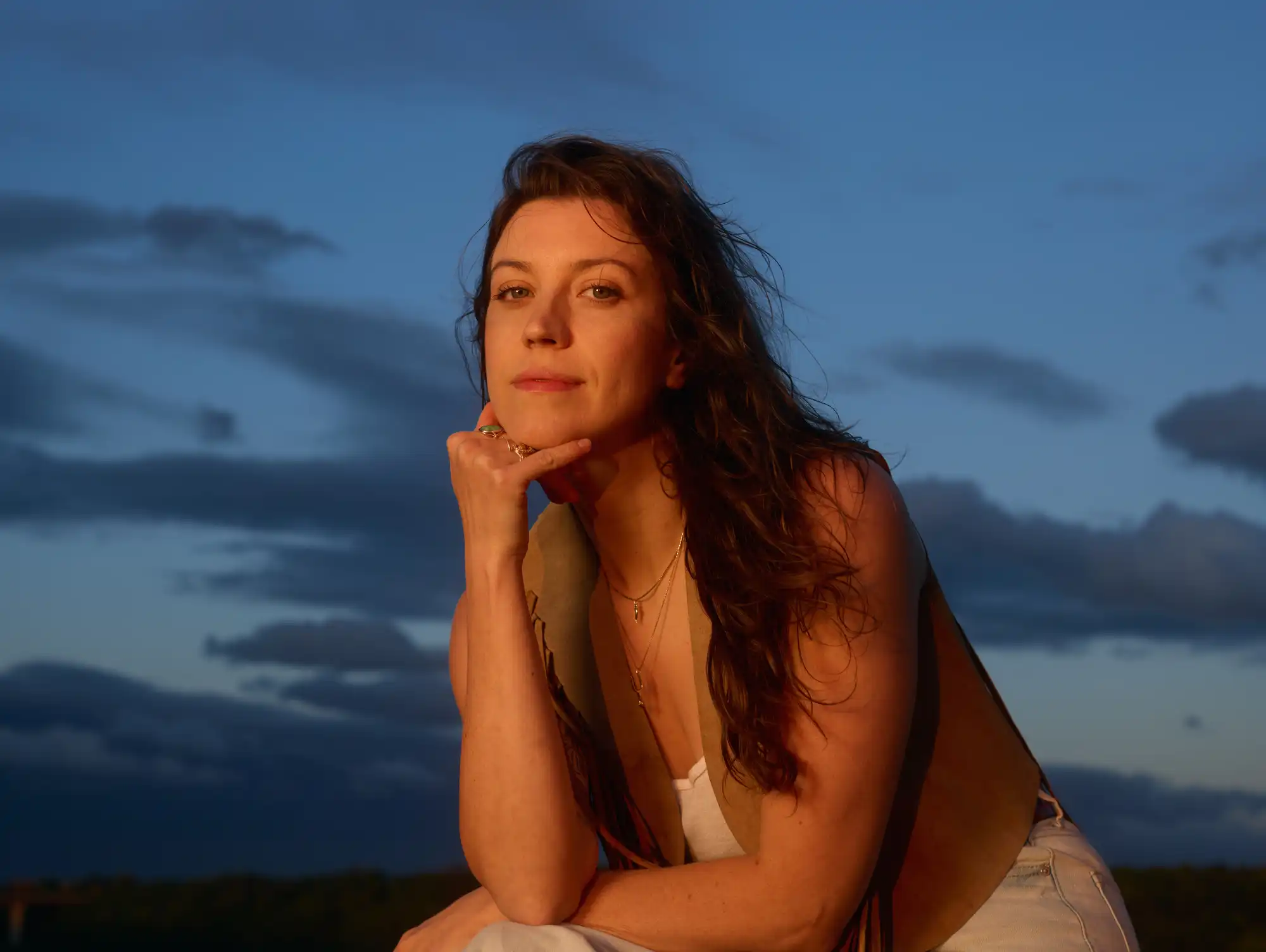
St. Paul native Clare Doyle has quickly found an audience over the past couple of years with a growing collection of songs that stand out immediately.
The country-rock singer-songwriter’s debut single “Devices” won over The Current early on. Doyle also landed the second-most votes in the first-ever Minnesota Music Month Scouting Report Poll in 2024, and was named one of First Avenue’s Best New Bands of 2023.
Doyle’s journey to the stage wasn’t so straightforward. She started singing and writing songs years ago, but ultimately chose not to pursue her childhood dream out of fear of not belonging. Instead, she moved to New Orleans — her self-described happy place — and worked in festival production. When the pandemic hit, she moved back to Minnesota and ultimately uncovered her voice in music.
Now, Clare Doyle is The Local Show’s June Artist of the Month, following the release of her first EP Stranger and ahead of her first appearance at the reputable Blue Ox Music Festival in Eau Claire, Wisconsin. In an exclusive interview, she detailed hustling gigs, lyrical inspirations, embracing her inner weirdo, and more.


You're right up there as far as exciting artists to watch, as a musician catching a lot of people's ears and attention. And we're so excited to have you as our Artist of the Month ahead of you performing at Blue Ox Music Festival. But you've been touring a lot. I've been seeing you everywhere. So let's start with that — you are hustling out there, playing shows. What's that been like for you?
Yeah, well, it's been super fun. It's kind of a new adventure. I did a little bit of touring a year after I started playing out or so ... I mean, it's just fun. So I was like, “Oh, okay. Well, I want to do more of that.”
That's awesome.
It is a hustle, but it's so fun and it's rewarding and it's cool. And so I've just been working on ramping up more of that and getting out as much as possible.
The thing about Americana/country music is it's so accessible in many different parts of the community. Tell me about how the audience has been connecting with your music in each place you've been playing.
Where I'm at, we end up playing a lot of different rooms on any given run. You have to take what you can get. So there's a listening room one night, and a honky tonk the next, and a dive bar the next, and a barbecue joint the next ... We're playing the same set. I try to tweak the energy or maybe the flow a little bit depending on where we are, or the feel of it ... You can tell different songs or different energies resonate differently in different spots. But I think generally speaking, it's pretty accessible music, and it's been cool to shop it around. Take it on the road.
[Clip of “The Catch” plays]
Your Dad took you to a Weezer concert back in the day. He helped nurture your relationship with music that you’ve said is a part of you — and that you later lost touch with. Now you're having this huge revival of songwriting, of finding your place in music. Tell me a bit about that journey, starting as a young child who wanted to be a singer growing up, and then losing touch with it, and then now coming back into it.
I think I was just naturally drawn to music from, I don't know, probably birth. I had a very musical family, not necessarily that everybody played or sang, but just everybody dug music and dug their own kind of music, in particular, my dad. He and I would play together and sing together. And that's been true my whole life. Still is.
What does he play?
He plays the guitar and has recently started writing too, which is really cool. That's kind of why I started playing guitar, because I went to college. He wasn't around anymore. I had to accompany myself. Ultimately … for a lot of reasons — personal, cultural, whatever — my artistic, creative, little freak, I suppressed it. I pushed it down because, especially in middle school, high school, I wanted to fit in. I felt very self-conscious, felt very sensitive, and I needed to fit in. I did enough of it that I forgot how to be weird and follow my own little musical voice and aspirations. And that's essentially what happened. I learned how to play guitar, wrote two or three songs, and then did not have the confidence. I felt like I didn't have any business making music, and I didn't belong. So I let it go, pressed it down, and did some other stuff for a while.
Suppressing that weird — what is the word I'm looking for? Masking your weirdness.
Totally. Yup.
I fully relate with that as being a shy kid growing up and feeling very uncomfortable about my weirdness and not wanting to show it to people, but also finding the embrace in that through different channels through which it's more "safe" to be weird. And music is absolutely a place for that. So when you say “weird,” what are you referring to?
Just any form of creativity, because I think you have to use your imagination and think outside of the box and give yourself a permission slip. Creativity requires giving yourself a permission slip to be weird or to be anything else ... Being weird is my shorthand for whatever you feel like.
Exactly, just embracing yourself.
Yeah, whatever comes. Channeling that sort of unfiltered inner child or unfiltered little artist that just has all these crazy ideas and isn't afraid to pursue them even if they don't sound right or look right.
[Clip of “Another Place to Cry” plays]
Can you reminisce a little bit about your time in New Orleans? What led you there, and what did you experience as a music lover there? And then coming back here?
My older sister had moved down there probably 10 years before I did. And it just became a really happy place for me visiting her there ... I lived in New York City for a year, and that was not a great fit. I was in a really tough spot, and I was like, “I gotta get out of here. I'm going to New Orleans.” That's my happy place. That's my spot. Basically, for the last 10-15 years, I've been working in festival production events. It's a very special place to me. Something about being down there, I mean, people are funky, they're weird. They're off-beat, and they're just very liberated, and they're very vibrant. And it's a vibrant culture. And just before I played music (when) I lived down there — that time allowed me, even just being there, to start taking off some of the layers — some of those masks. That was really instrumental. Even just as a person, feeling like I could embrace a bigger self or a more colorful or whatever self. And musically — I wasn't writing at the time. I wasn't performing [when] I was living down there, and so I didn't have any sort of direct inspiration. Just being in such an artistically rich and vibrant place is inspiring and just makes you feel a little bit more like an artist, even being around it.
[Clip of “Maybelline” plays]
How did you find your footing in Minneapolis? You're playing with a lot of really great players, Kai Brewster, Taylor James Donskey.
Alex Young.
Michael Gay. Just some down-home, awesome guys.
I had been gone for long enough that anybody that I knew from my youth, or who had lived here before, was pretty much gone. So I really didn't know very many people in town at all. When I moved back, I give credit to all of the people in the music community. Everyone was so welcoming and encouraging and supportive and connective. It took a while to get to know people. I went out to a lot of shows. I was lucky enough to be asked to play shows pretty consistently. And so that was a really good way to meet people and get connected ... It's just such a great community. I was lucky to meet everybody along the way and form these connections.
You went to the St. Paul Conservatory. How do you feel your experience there informed your music making?
I was actually at SPCPA for the theater track ... I was there pretty early on. I think I was there with their first graduating class.
Oh, wow. So it's a new establishment.
Yeah, it would have been my, maybe, sophomore year in high school that I transferred there, and it was maybe their first year open. So, it was very grassroots at the time, a little bit loosey goosey. But anyway I was doing theater. I think early on, even before junior high school, I got the idea in my head that that was my musical outlet, musical theater. I kind of wish that I had gone the route of starting a punk band. But, I don't know, I went the theater route. But I think I liked theater because of the musical element of it ... I am not a Shakespeare [actor]. Love reading it. But I think it was important, especially at that time in my life, to have even a little bit of a voice or a presence saying, “Ueah, you should be a little artist, and you should do art.” That was probably super important, and laid some groundwork for me to actually be able to do it eventually.
Yeah, absolutely. I was poking around at more interviews, and I just wanted to point this out: you enjoyed the song, "Gone For Good" by The Shins.
Yeah, totally.
I was obsessed with that song. In fact, I played it with my mom at a college open mic, and she played harmonica on it.
Oh, nice. That's awesome.
So I feel the parallel with you having a connection with your dad through music. You were pointing out the poetry. You couldn't help but be inspired by the way he put words together. Tell me about your relationship with now writing lyrics through songwriting?
Yeah, totally. It's exhilarating to hear lines like that, or to hear lyricism like that ... It's just like watching a triple backflip, or like watching an Olympic gymnast.
Exactly. It feels out of this world to me.
Yeah. I wrote two or three songs when I was in college before I kind of put it down. But it wasn't until I started writing again that I started digging into songwriting and re-listening to a lot of music. [I was] listening to a lot of music for the first time and really focusing on the songwriting, on the lyricism. And now I can't unhear it. I can't not pay attention to it. It is so exciting. It's so wild. There's a million ways to do it, and there's a million ways to do it well. Just the different ways that everyone approaches it, or the voices that different folks have in their writing. So yeah, I don't know, I spent a lot of time drooling over other people's songwriting.
It helps to get inspiration, because sometimes when I'll hear something it'll cause me to pick up my guitar (and) just repeat what they're singing … then all of a sudden it might generate an idea.
Yeah, it's fun. Those moments where you're listening to something and you have to pause it and go pick up the guitar or whatever. It's amazing. I had a long drive between New Orleans and here, recently in the last couple weeks, and decided to revisit Lucinda Williams' entire catalog ... And there are those moments where you realize there are lines — it makes you pissed. How are they that good? How did they land that line? How did they manage to think to say it like that?
And use that melody, cadence, or arrangement with these words? I learned to love Lucinda Williams after I performed a couple of tributes with Kiss The Tiger. And I've always loved her music, but I'd never understood the extent of the wow.
I had the same reaction. Because I had stumbled across her stuff early ... I was 18 or 19, and I don't know how I came across her, but I did. And I got into a couple of albums, but I was re-listening, and I don't think that I had a full appreciation, when I was younger, for just how good she is. And then was re-listening a couple weeks ago, and I was like, damn, dude. I mean, it's crazy.


What do you have coming up?
Shows on shows for the summer. Definitely, a lot of cool gigs coming up. I'm really excited about Blue Ox. Then we've got some shows around the region — a tour planned for August, short one. Then, I think it’s time to start recording again. The last few releases that I've put out have felt — they haven't been motivated by this necessarily, but there's definitely a pressure in this day and age to keep the releases coming and always be this, that or the other thing ... I'm kind of waiting till the next one feels right, and I have the right set of songs together and the right concept for it. So, I don't know, maybe this fall get into some [writing]. I think this fall I'm going to try and slow down on shows a little bit. We've been going pretty hard, which is so fun. It's so fun. It's so hard to stop playing shows. It's hard to slow down. But I want to make a little more time for myself this year to dig into writing more and maybe dig into some recording.
Clare Doyle performs at Blue Ox Music Festival in Eau Claire, Wisconsin, on Friday, June 27. Details. For more upcoming Clare Doyle shows, check her website.